

Creating a home that feels stylish, functional, and future-ready can feel overwhelming—especially with trends, technologies, and design advice constantly evolving. If you’re searching for clear, practical guidance on elevating your space, this article is designed to give you exactly that. We’ll break down essential home styling principles, explore current decor trends, and share modern interior techniques that make any room feel intentional and cohesive.
Beyond aesthetics, we’ll also cover space optimization hacks and smart home interior integration strategies that blend technology seamlessly into your design—so your home works smarter without sacrificing style. Every recommendation is grounded in hands-on research, analysis of leading interior design practices, and insights drawn from real-world applications.
Whether you’re refreshing a single room or reimagining your entire home, you’ll find actionable ideas, practical tips, and design clarity to help you create a space that looks beautiful and functions effortlessly.
Walk into many smart homes and you’ll hear a whisper: “Why does this feel like a showroom?” one homeowner told me. That’s the problem—gadgets first, design second. True smart home interior integration treats technology as infrastructure, not decor.
Interior designer Maya Lopez said, “If you can see every wire, you’ve already failed.” She recommends:
- Concealed hubs and in-wall wiring
- Voice controls that replace cluttered panels
- Lighting scenes that complement color palettes
Critics argue visible tech signals innovation. Fair. But warmth beats flash. Think less sci-fi lab, more subtle Tony Stark penthouse (minus the chaos). Design should feel effortlessly human always.
The Invisible Tech Philosophy: Principles for Seamless Integration
We’ve all been there: a beautifully styled room ruined by a snake pit of cables or a blinking router stealing the spotlight (why are they always neon?). Invisible tech isn’t about hiding from innovation; it’s about restoring visual calm through smart home interior integration.
-
Concealment and Camouflage. First, tackle the clutter. Route cables through baseboards, tuck routers into ventilated baskets, and use smart plugs behind sofas or consoles. In other words, if it doesn’t need to be seen, don’t let it be. Wireless where possible, disguised where necessary.
-
Match Finishes and Materials. Next, stop treating devices like afterthoughts. Choose thermostats, switches, and speakers that echo your palette—matte black, brushed brass, or warm wood grain. When tech matches your hardware, it feels intentional, not intrusive.
-
Prioritize Ambiance over Automation. After that, shift your mindset. Instead of obsessing over features, create scenes like “Movie Night” or “Morning Focus.” The goal is mood, not mechanics (your guests shouldn’t need a tutorial).
-
Unify Your Ecosystem. Finally, pick one platform—Apple HomeKit or Google Home—to avoid app overload and daily frustration. Pro tip: compatibility first, impulse buys second.
For more styling guidance, explore our home styling essentials.
Room by Room: Practical Smart Decor Applications
Designing a tech-forward home doesn’t mean turning it into a gadget showroom. Instead, the goal is seamless smart home interior integration—where technology supports your lifestyle without visually overwhelming the space.
The Living Room: The Social Hub
Start with lighting, since it shapes mood instantly. Install recessed smart lighting to highlight accent walls or artwork. Then, connect it to a mobile app so you can dim lights for movie night in seconds (no dramatic “who turned off the lights?” moment required). Some argue smart lighting is unnecessary when lamps work fine. However, layered, app-controlled lighting reduces energy use and increases bulb lifespan (U.S. Department of Energy), making it both stylish and practical.
Next, consider automated blinds that match your window frames. Measure the inside mount carefully, order custom sizing, and sync them to sunset schedules. Finally, swap bulky speakers for in-wall options or a discreet soundbar painted to match the wall.
The Kitchen: The Functional Core
In the kitchen, prioritize convenience without clutter. Begin by installing under-cabinet smart lighting. LED strips are affordable, easy to mount with adhesive backing, and improve task visibility (National Kitchen & Bath Association recommends layered lighting for efficiency).
Although some homeowners worry voice-activated faucets feel excessive, they reduce cross-contamination when handling raw foods—a practical upgrade, not just a novelty. For screens, recess a smart display into cabinetry. Measure depth clearance first and add ventilation space behind it to prevent overheating.
The Bedroom: The Personal Sanctuary
Here, focus on wellness. Automated blackout curtains can be programmed to close at dusk. Pair them with smart lamps that mimic sunrise, gradually increasing brightness to support natural circadian rhythms (Sleep Foundation).
Additionally, conceal compact speakers inside nightstands for white noise or calming playlists. Set timers so music fades out automatically. The result? A bedroom that feels serene, not technical—more spa retreat, less sci-fi set.
Essential Tech Categories for the Design-Conscious Home
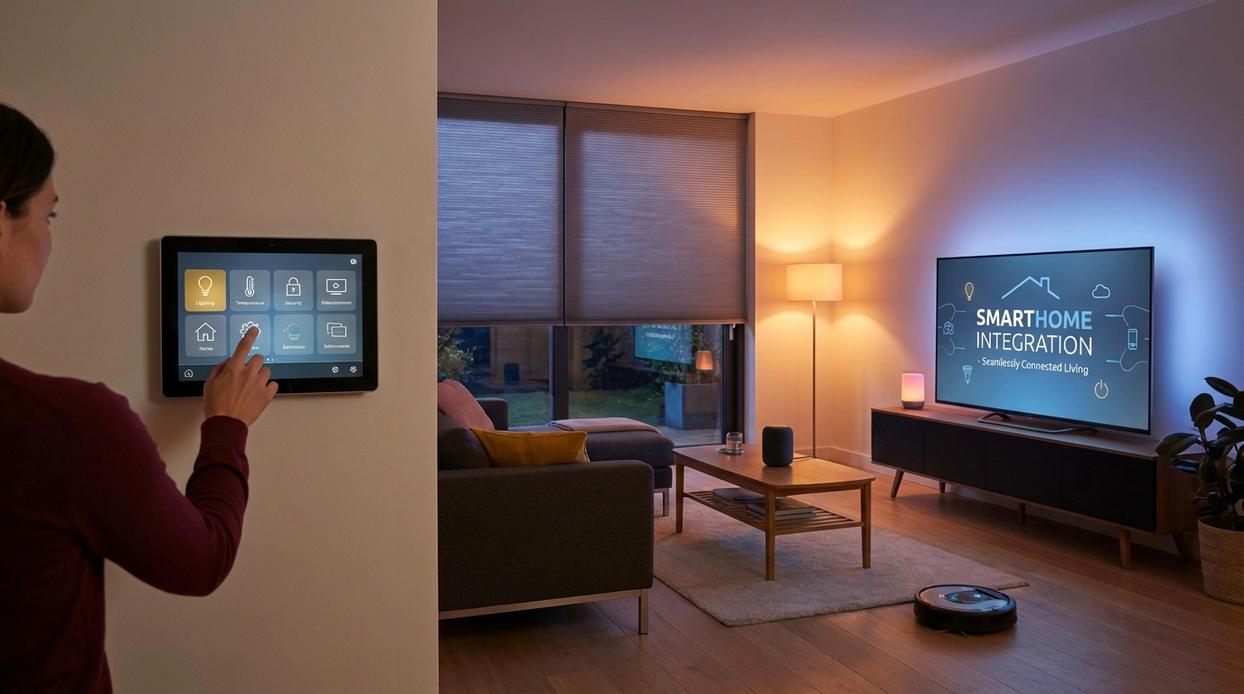
I remember the first time I swapped standard bulbs for layered lighting in my living room. The space didn’t just get brighter—it felt curated. That’s the power of intelligent lighting. This goes beyond smart bulbs to include discreet dimmers, concealed LED strips, and programmable switches. By tucking LEDs into ceiling coves or under shelving, you create layered lighting (a mix of ambient, task, and accent light) that adapts to mood and time of day. According to the U.S. Department of Energy, LEDs use at least 75% less energy than incandescent lighting, making beauty efficient (which is always a win).
Next, consider climate and comfort control. Sleek thermostats like Nest or Ecobee double as wall art while learning your habits. Meanwhile, low-profile smart vents and minimalist ceiling fans blend into architectural lines instead of interrupting them. Some argue traditional thermostats work fine. True—but smart systems can reduce heating and cooling costs by about 10–15% (Energy Star).
Finally, architectural audio transforms how a room feels. In-wall or in-ceiling speakers—painted to match surfaces—or fully invisible speakers hidden behind drywall preserve clean sightlines. When done right, smart home interior integration supports both aesthetics and performance, much like the principles in modern interior techniques that maximize natural light.
Common Pitfalls and How to Avoid Them
First, consider Brand A vs. Brand B. A mismatched ecosystem—mixing devices that don’t communicate—means juggling five apps just to dim the lights. In contrast, a unified system works like an orchestra instead of a garage band rehearsal (and yes, that difference shows daily).
Next, flashy gadgets vs. solid groundwork. Ignoring wiring and Wi‑Fi planning leads to dead zones and cable clutter. Thoughtful smart home interior integration, however, keeps performance seamless and surfaces clean.
Finally, features vs. feel. A device packed with functions can overpower a room, whereas design-conscious choices quietly elevate how you actually live.
Your Blueprint for an Elegant, Automated Home
You now have the core principles for creating a home where technology and design coexist beautifully. The biggest mistake? Letting gadgets dictate the aesthetic (we’ve all seen the tangled-cord corner). By prioritizing integration, concealment, and ambiance, you avoid the cluttered-tech look and move toward smart home interior integration that feels intentional.
I’ll admit—there’s still debate about which systems age best or integrate seamlessly long term. Not every platform plays nicely forever. That’s okay.
The path forward is simple: take a design-first approach. Start with one room—perhaps lighting—and replace a single “dumb” item with a refined smart alternative. Build confidence from there.
Bring Your Home Vision to Life with Confidence
You started this guide looking for practical ways to elevate your space with style, function, and intention. Now you have a clearer understanding of how to layer textures, optimize layouts, follow modern decor trends, and incorporate smart home interior integration without overwhelming your design.
A poorly planned space can feel cluttered, cramped, or disconnected — no matter how beautiful the individual pieces are. The real transformation happens when every element works together to support how you live each day.
Now it’s time to take action. Start by choosing one room that feels inefficient or outdated and apply the techniques you’ve learned — refine the layout, simplify the palette, and integrate technology seamlessly. If you want step-by-step styling insights, trend updates, and proven space optimization strategies trusted by thousands of decor enthusiasts, explore our latest guides and start redesigning with purpose today.
Your ideal home isn’t about buying more — it’s about designing smarter. Begin now.
 Head of Content Strategy
There is a specific skill involved in explaining something clearly — one that is completely separate from actually knowing the subject. Fredrickien Hunteron has both. They has spent years working with decor trends and shifts in a hands-on capacity, and an equal amount of time figuring out how to translate that experience into writing that people with different backgrounds can actually absorb and use.
Fredrickien tends to approach complex subjects — Decor Trends and Shifts, Pal Modern Interior Techniques, Space Optimization Hacks being good examples — by starting with what the reader already knows, then building outward from there rather than dropping them in the deep end. It sounds like a small thing. In practice it makes a significant difference in whether someone finishes the article or abandons it halfway through. They is also good at knowing when to stop — a surprisingly underrated skill. Some writers bury useful information under so many caveats and qualifications that the point disappears. Fredrickien knows where the point is and gets there without too many detours.
The practical effect of all this is that people who read Fredrickien's work tend to come away actually capable of doing something with it. Not just vaguely informed — actually capable. For a writer working in decor trends and shifts, that is probably the best possible outcome, and it's the standard Fredrickien holds they's own work to.
Head of Content Strategy
There is a specific skill involved in explaining something clearly — one that is completely separate from actually knowing the subject. Fredrickien Hunteron has both. They has spent years working with decor trends and shifts in a hands-on capacity, and an equal amount of time figuring out how to translate that experience into writing that people with different backgrounds can actually absorb and use.
Fredrickien tends to approach complex subjects — Decor Trends and Shifts, Pal Modern Interior Techniques, Space Optimization Hacks being good examples — by starting with what the reader already knows, then building outward from there rather than dropping them in the deep end. It sounds like a small thing. In practice it makes a significant difference in whether someone finishes the article or abandons it halfway through. They is also good at knowing when to stop — a surprisingly underrated skill. Some writers bury useful information under so many caveats and qualifications that the point disappears. Fredrickien knows where the point is and gets there without too many detours.
The practical effect of all this is that people who read Fredrickien's work tend to come away actually capable of doing something with it. Not just vaguely informed — actually capable. For a writer working in decor trends and shifts, that is probably the best possible outcome, and it's the standard Fredrickien holds they's own work to.