
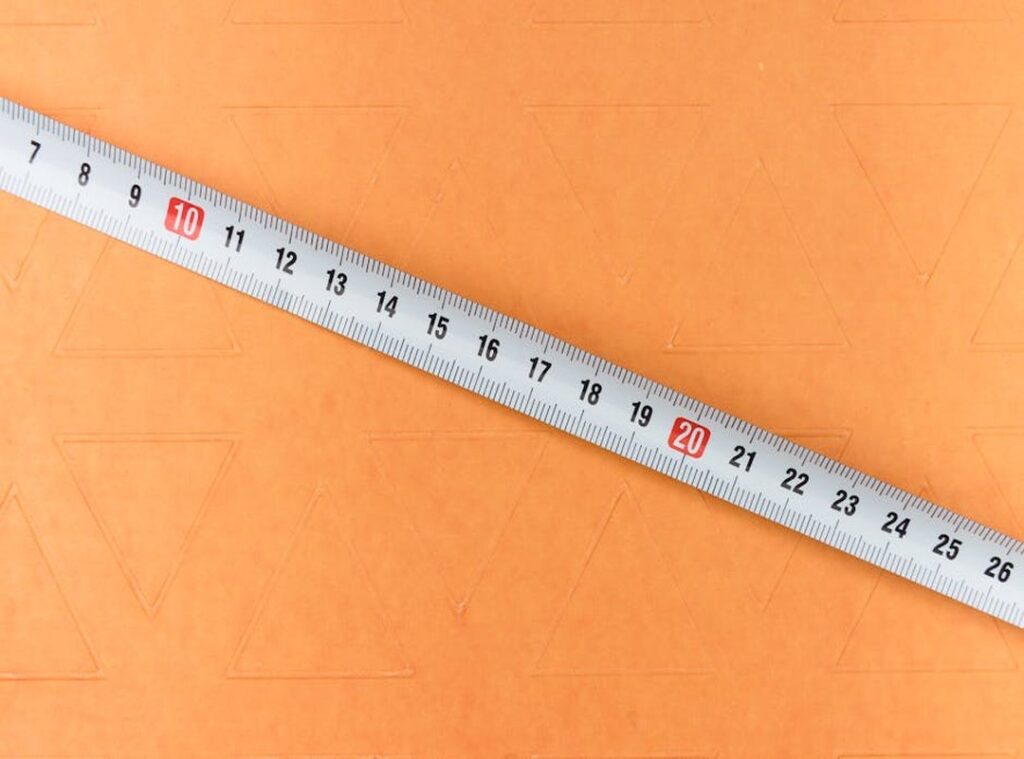
71 inches is equal to 180.34 centimeters.
When you’re picking out a new TV console, a three-seater sofa, or a large piece of wall art, this measurement can make or break your space.
I’m here to give you the simple conversion and some practical tips.
Getting it right means the difference between a room that feels off and one that looks professionally designed.
Do you ever feel like no matter what you do, something just doesn’t fit?
Trust me, I’ve been there.
Later, I’ll show you how to measure like a pro and avoid those common, costly mistakes.
Let’s get started.
The Simple Math: How to Convert Inches to Centimeters Instantantly
Let’s get straight to it. The universal conversion formula is simple: Inches × 2.54 = Centimeters. This is the key to unlocking any inch-to-cm conversion.
Now, let’s walk through a specific calculation, and for 71 inches, you multiply by 2.54. That gives you exactly 180.34 cm.
Simple, right?
Why does this matter? Well, in today’s global marketplace, especially when ordering decor or furniture from European or Asian brands, you often need to understand the metric system. I once ordered a couch from an Italian brand and didn’t convert the measurements.
Let’s just say, it didn’t fit through my front door. A costly mistake, but a lesson learned.
Understanding the formula gives you a better sense of scale. Sure, apps can do the math, but knowing the formula helps you visualize sizes more accurately. It’s like having a mental ruler, which is super handy when browsing items online or in-store.
Here’s a small, easy-to-read reference chart for nearby conversions:
| Inches | Centimeters |
|---|---|
| 65 | 165.10 |
| 70 | 177.80 |
| 71 | 180.34 |
| 72 | 182.88 |
| 75 | 190.50 |
This chart can be a quick go-to when you’re in a pinch. Trust me, it’s saved me a lot of headaches.
Visualizing 71 Inches: Common Home Items with This Dimension
When you’re trying to picture 71 inches, it can be a bit tricky. But don’t worry, I’ve got some common household items that are about this size.
Sofas and loveseats, for example. A 71-inch sofa is what you’d call a ‘small three-seater’ or a generous loveseat. Perfect for apartments or smaller living rooms.
It gives you enough seating without taking up too much space.
Media consoles and credenzas also come in at around 71 inches. These are ideal for supporting large televisions (65-75 inches) while providing balanced visual weight. Your TV setup looks sleek and well-proportioned.
Dining benches or entryway furniture can also measure 71 inches. This length provides ample seating or surface area without overwhelming the space. It’s a great way to add functionality and style to your home.
Large-scale wall art or headboards can be 71 inches as well. A piece this size can serve as a powerful focal point for a queen or king-sized bed. It adds a touch of elegance and makes the room feel more put together.
Pro tip: Always check the full dimensions (width, depth, and height) in both inches and cm before purchasing. For example, 71inch to cm is 180.34 cm. This ensures a perfect fit and saves you from any installation headaches.
Understanding these dimensions can help you make better choices when decorating. You’ll know exactly what will fit and look good in your space. And if you want to learn more about how to create a cohesive look, this guide can be really helpful.
Measure Like an Interior Designer: Avoiding Common Mistakes

You’ve heard it before: “Measure twice, purchase once.” It’s a simple habit, but it saves you time, money, and a whole lot of frustration. Trust me, I’ve been there.
Once, I bought a 71-inch console for my living room. I thought it would fit perfectly. But when I got it home, it looked cramped and out of place.
I learned the hard way that a 71-inch console needs more than 71 inches of wall space.
Always leave at least 3-6 inches on each side. This breathing room makes a huge difference in how the space feels.
Architectural features can be tricky. Baseboards, window frames, and light switches can mess up your furniture placement. Make sure to measure around these elements.
A few extra inches here and there can save you from a lot of headaches.
Here’s a quick trick: use painter’s tape to map out the 71-inch x [depth] footprint of a potential furniture piece on the floor or wall. This helps you visualize its scale in the room.
Don’t forget to measure pathways and doorways. A 71-inch sofa won’t do you any good if it can’t fit through a 30-inch doorway or around a tight corner.
And one last thing. If you’re working with metric, 71inch to cm is about 180 cm. Keep that in mind when you’re shopping internationally.
By following these steps, you can avoid the mistakes I made and create a space that feels just right.
Putting It All Together: From a Simple Number to a Stunning Space
Starting with a simple question—Convert 71 inches to centimeters—we embarked on a journey that led us to the power of making informed, confident design choices. Accurate measurements are the foundation of any well-designed room, ensuring balance, functionality, and flow.
Use the 2.54 formula for conversions, and visualize the scale with real-world items. Always measure for breathing room and pathways.
You now have the tools not just to convert numbers, but to translate your vision into a tangible, beautiful reality. Grab your tape measure and start planning your next project with confidence.
 Director of Community & Partnerships
Ask Eloria Esthova how they got into decor trends and shifts and you'll probably get a longer answer than you expected. The short version: Eloria started doing it, got genuinely hooked, and at some point realized they had accumulated enough hard-won knowledge that it would be a waste not to share it. So they started writing.
What makes Eloria worth reading is that they skips the obvious stuff. Nobody needs another surface-level take on Decor Trends and Shifts, Space Optimization Hacks, In-Depth Guides. What readers actually want is the nuance — the part that only becomes clear after you've made a few mistakes and figured out why. That's the territory Eloria operates in. The writing is direct, occasionally blunt, and always built around what's actually true rather than what sounds good in an article. They has little patience for filler, which means they's pieces tend to be denser with real information than the average post on the same subject.
Eloria doesn't write to impress anyone. They writes because they has things to say that they genuinely thinks people should hear. That motivation — basic as it sounds — produces something noticeably different from content written for clicks or word count. Readers pick up on it. The comments on Eloria's work tend to reflect that.
Director of Community & Partnerships
Ask Eloria Esthova how they got into decor trends and shifts and you'll probably get a longer answer than you expected. The short version: Eloria started doing it, got genuinely hooked, and at some point realized they had accumulated enough hard-won knowledge that it would be a waste not to share it. So they started writing.
What makes Eloria worth reading is that they skips the obvious stuff. Nobody needs another surface-level take on Decor Trends and Shifts, Space Optimization Hacks, In-Depth Guides. What readers actually want is the nuance — the part that only becomes clear after you've made a few mistakes and figured out why. That's the territory Eloria operates in. The writing is direct, occasionally blunt, and always built around what's actually true rather than what sounds good in an article. They has little patience for filler, which means they's pieces tend to be denser with real information than the average post on the same subject.
Eloria doesn't write to impress anyone. They writes because they has things to say that they genuinely thinks people should hear. That motivation — basic as it sounds — produces something noticeably different from content written for clicks or word count. Readers pick up on it. The comments on Eloria's work tend to reflect that.