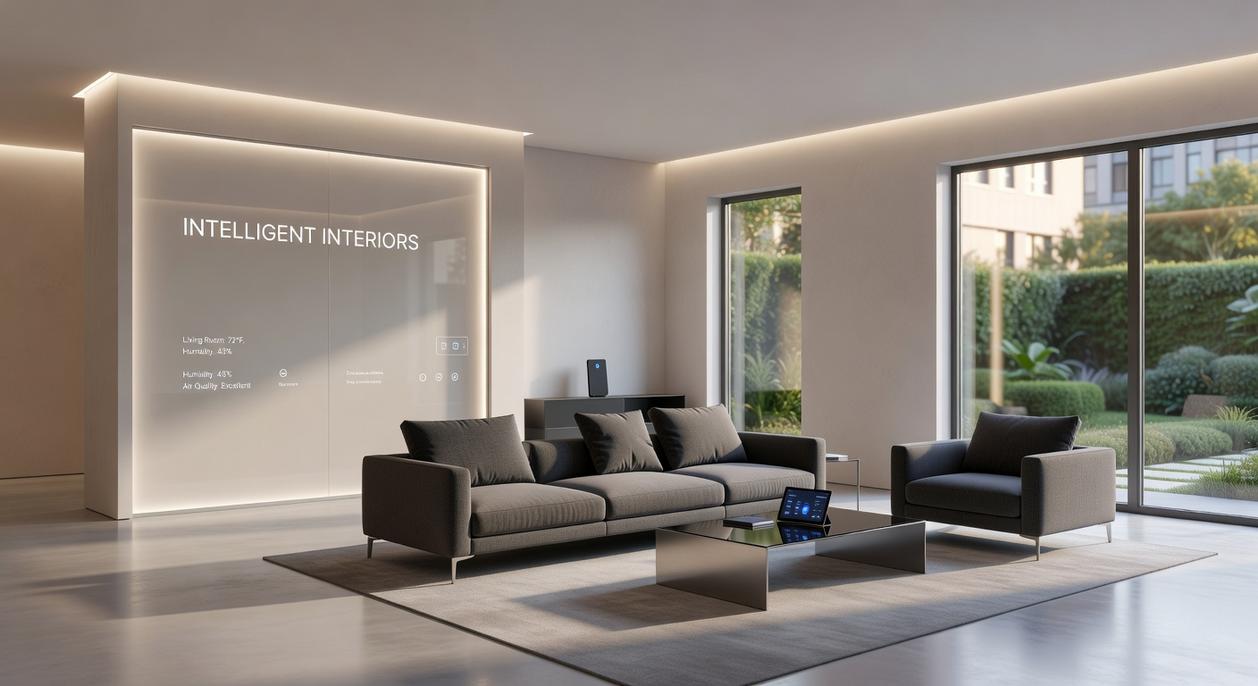
Today’s homeowners want more than beautiful spaces—they want intelligent ones. But blending cutting-edge technology with refined aesthetics can feel overwhelming, especially when bulky devices and visible wires disrupt your carefully curated decor. This guide to smart home interior design is created to help you strike the perfect balance between innovation and elegance. We’ll explore practical, design-forward strategies to seamlessly integrate smart lighting, speakers, thermostats, and more into your space without compromising style. Backed by expert insights into modern decor trends and space optimization techniques, this article shows you how to create a home that feels cohesive, contemporary, and effortlessly connected.
The Invisible Foundation: Planning for Seamless Integration
Have you ever walked into a room and wondered why it just works—no visible wires, no blinking routers, no tech clutter stealing the spotlight? That’s not luck. That’s planning.
The foundation of seamless smart home interior design starts before the first paint stroke. Where will your speakers live? Are motion sensors aligned with natural traffic flow? Will wall-mounted tablets disrupt your gallery wall? Asking these questions early prevents awkward retrofits later (because no one enjoys reopening freshly painted drywall).
Smart Wiring Options
Before construction wraps, talk with your electrician about concealed pathways. Clean walls don’t happen by accident.
| Solution | Best For | Benefit |
|———–|———-|———-|
| In-wall wiring | New builds or renovations | Completely hidden cables |
| Baseboard channels | Minimal remodeling | Subtle, accessible routing |
| Paintable cord covers | Existing homes | Blends into wall color |
Think ahead: where will your router, hubs, and bridges go? Instead of scattering devices across countertops, create a dedicated tech hub in a ventilated closet or media cabinet. Wouldn’t you rather open one organized door than hunt behind furniture when Wi-Fi drops?
Some argue wireless tech eliminates this need. But even wireless systems need power—and visible power cords can undo a carefully styled room.
For broader inspiration, explore emerging interior design trends shaping 2026 homes. Planning now means elegance later.
Illuminating Your Space: Smart Lighting as a Design Element
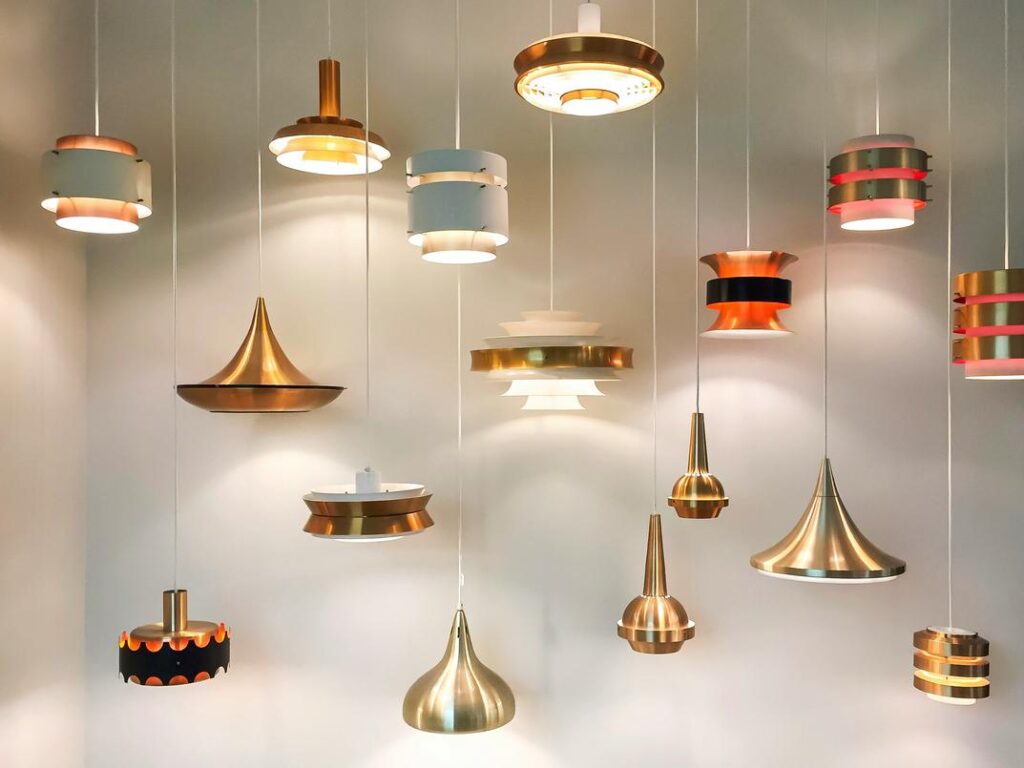
“Don’t just change the bulb—change the experience,” a lighting consultant once told me while adjusting a dimmer in a client’s living room. And honestly, that advice sticks. While smart bulbs are convenient, smart switches and dimmers create a seamless, built-in look. Because they’re wired into the wall, you can pair them with statement chandeliers or vintage sconces without sacrificing control (no plastic-looking bulbs ruining your vibe).
Then there’s the magic of lighting scenes. One homeowner laughed and said, “I tap ‘Entertain,’ and suddenly my apartment feels like a cocktail bar.” In practice, scenes are preset lighting combinations—like “Relax,” “Focus,” or “Movie Night”—that adjust brightness and tone instantly. According to the American Lighting Association, layered lighting improves both functionality and mood in residential spaces (ALA, 2023).
Meanwhile, concealed LED strips quietly steal the show. Tucked under cabinets or behind headboards, they produce indirect light—meaning illumination that bounces off surfaces rather than glaring directly at you. The result feels architectural and refined.
Some argue this is overkill. “Isn’t a lamp enough?” Sure, sometimes. However, integrated lighting elevates smart home interior design from practical to unforgettable (think less dorm room, more design magazine spread).
Entertaining Elegance: Blending Audio and Visual Tech
Technology should enhance a room, not dominate it. If your television feels like a black hole on the wall, start by making it disappear. Consider models that display curated artwork when powered off, or install motorized lifts that tuck the screen into ceilings or cabinetry. For tighter spaces, custom panels can slide closed, restoring visual calm in seconds.
Next, embrace invisible sound. In-wall or in-ceiling speakers deliver immersive audio while staying virtually unseen. Paintable grilles blend seamlessly with surrounding surfaces, keeping the focus on your decor rather than the hardware. Pro tip: plan speaker placement during renovations to avoid costly retrofits later.
Furniture choices matter just as much. Look for media consoles with slatted wood or acoustic fabric doors that allow signals to pass through. Built-in cable management and proper ventilation protect devices and prevent overheating.
Incorporating these elements into your smart home interior design ensures technology feels intentional, not intrusive. Some argue that showcasing large screens and statement speakers reflects modern luxury. That can work in media rooms, but in shared living areas, subtlety often creates a more welcoming atmosphere. Balance performance with aesthetics, and your space will feel high-tech and livable.
Smart devices, when chosen well, should look intentional, not incidental.
Design-Forward Device Selection
Think of your speaker as sculpture, your display as framed art. Brands now offer fabric-wrapped, color-matched finishes that blend into shelving and side tables. Instead of hiding them, anchor them with a stack of books or a ceramic tray for balance. Placement is power: eye-level positioning feels curated, while symmetry reduces visual noise. Competitors talk specs; few address sightlines from the sofa or entry, where first impressions form.
Camouflage sensors by mapping traffic patterns first. Mount motion units above door casings or atop tall cabinetry, keeping detection wide but hardware discreet. Temperature hubs disappear on high shelves, painted to match walls. This is where smart home interior design outpaces gadget blogs, which rarely discuss paint codes or trim heights.
Automated blinds remove cords and clutter, delivering a gallery-clean finish. Choose lined linens or textured weaves that echo rugs and upholstery. Some argue motorized treatments feel clinical; in practice, synchronized morning light is cinematic—think subtle sci-fi, not spaceship. Pro tip: specify quiet motors under 35 decibels for serenity. The result is technology that enhances, never hijacks, your aesthetic story.
Design should whisper, not shout, even when connected. Always prioritize harmony.
Your Home, Reimagined: A Harmonious Blend of Tech and Taste
You set out to discover how to blend innovation with elegance — and now you’ve seen that achieving seamless smart home interior design is completely possible with the right approach. No more exposed wires, clunky devices, or tech that disrupts your aesthetic. Your home can feel refined, intentional, and intelligently built around your lifestyle.
The frustration of choosing between beauty and functionality ends here. With thoughtful planning and strategic upgrades, you can enjoy convenience without sacrificing style.
Now take the next step: start with one room and apply these principles today. If you want expert-backed ideas trusted by thousands of modern homeowners, explore our proven design guides and transform your space into a home that’s as stunning as it is smart.
 Director of Community & Partnerships
Ask Eloria Esthova how they got into decor trends and shifts and you'll probably get a longer answer than you expected. The short version: Eloria started doing it, got genuinely hooked, and at some point realized they had accumulated enough hard-won knowledge that it would be a waste not to share it. So they started writing.
What makes Eloria worth reading is that they skips the obvious stuff. Nobody needs another surface-level take on Decor Trends and Shifts, Space Optimization Hacks, In-Depth Guides. What readers actually want is the nuance — the part that only becomes clear after you've made a few mistakes and figured out why. That's the territory Eloria operates in. The writing is direct, occasionally blunt, and always built around what's actually true rather than what sounds good in an article. They has little patience for filler, which means they's pieces tend to be denser with real information than the average post on the same subject.
Eloria doesn't write to impress anyone. They writes because they has things to say that they genuinely thinks people should hear. That motivation — basic as it sounds — produces something noticeably different from content written for clicks or word count. Readers pick up on it. The comments on Eloria's work tend to reflect that.
Director of Community & Partnerships
Ask Eloria Esthova how they got into decor trends and shifts and you'll probably get a longer answer than you expected. The short version: Eloria started doing it, got genuinely hooked, and at some point realized they had accumulated enough hard-won knowledge that it would be a waste not to share it. So they started writing.
What makes Eloria worth reading is that they skips the obvious stuff. Nobody needs another surface-level take on Decor Trends and Shifts, Space Optimization Hacks, In-Depth Guides. What readers actually want is the nuance — the part that only becomes clear after you've made a few mistakes and figured out why. That's the territory Eloria operates in. The writing is direct, occasionally blunt, and always built around what's actually true rather than what sounds good in an article. They has little patience for filler, which means they's pieces tend to be denser with real information than the average post on the same subject.
Eloria doesn't write to impress anyone. They writes because they has things to say that they genuinely thinks people should hear. That motivation — basic as it sounds — produces something noticeably different from content written for clicks or word count. Readers pick up on it. The comments on Eloria's work tend to reflect that.