
A small room doesn’t have to feel cramped or limiting. With the right design strategies, even the tightest space can feel open, airy, and intentionally styled. If you’re searching for practical ways to make a small room look bigger, you’re in the right place. This guide shares smart, design-forward techniques that maximize light, layout, color, and storage to instantly transform how your space looks and functions. Rooted in proven interior design principles, these tips will help you reduce visual clutter, enhance flow, and create a room that feels both cozy and spacious—without knocking down a single wall.
Create an Illusion of Depth with Light and Color
I used to think white walls were the ultimate small-space solution. They’re not. In fact, stark white can create harsh edges that visually box a room in. Instead, try a monochromatic palette—painting walls, trim, and even the ceiling the same soft shade, like warm beige or pale gray. When the boundaries blur, the eye keeps moving (and that’s exactly what you want). This simple shift can instantly make a small room look bigger without knocking down a single wall.
However, color alone won’t save you if your lighting is flat. I learned this the hard way after relying on one dramatic ceiling fixture. The result? Heavy shadows and a room that felt smaller at night. A better approach is three-point lighting: ambient lighting for overall glow, task lighting for function (like reading lamps), and accent lighting—think a subtle uplight behind a plant—to add dimension. Layered light creates visual depth, much like stage design in a theater production.
Then there’s the window treatment mistake. Short, dark curtains shrink a room. Instead, hang sheer panels high and wide around the frame to amplify natural light and imply a larger window.
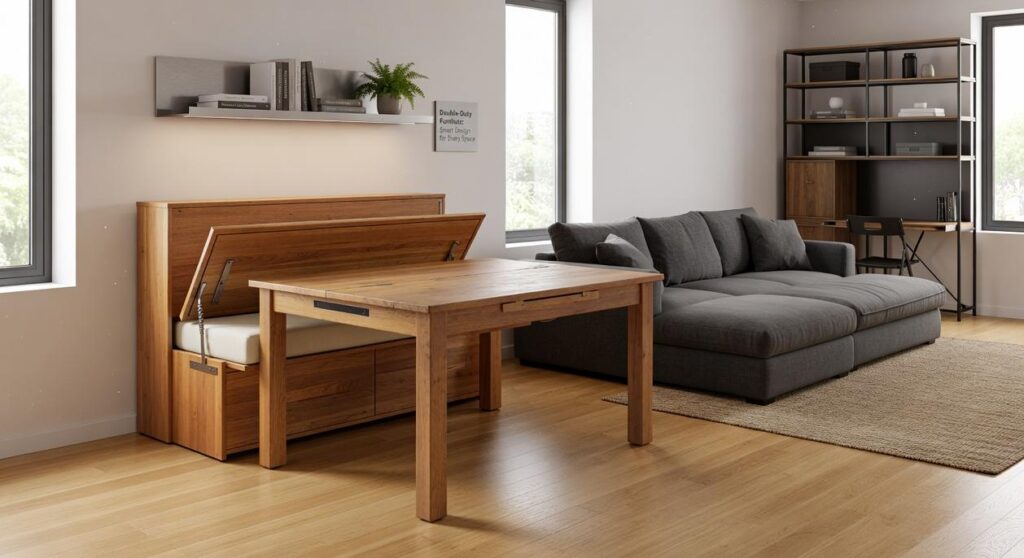
For more compact-space strategies, explore multi functional furniture that saves space and adds style.
Choose Furniture That Works Smarter, Not Harder
Smart design isn’t about squeezing more in. It’s about choosing pieces that do more.
The “Leggy” Furniture Rule
Furniture with visible legs—sofas, consoles, side tables—creates visual breathing room. When you can see more floor, the room feels less cramped. Designers call this visual continuity (the uninterrupted flow of sightlines across a space). According to interior design studies from Houzz, rooms that expose more flooring are consistently rated as “more spacious” by homeowners. It’s a simple optical trick that helps make a small room look bigger without knocking down a single wall.
Embrace Multi-Functionality
Multi-functional furniture isn’t a trend; it’s a strategy. Consider:
- An ottoman with hidden storage for blankets or books
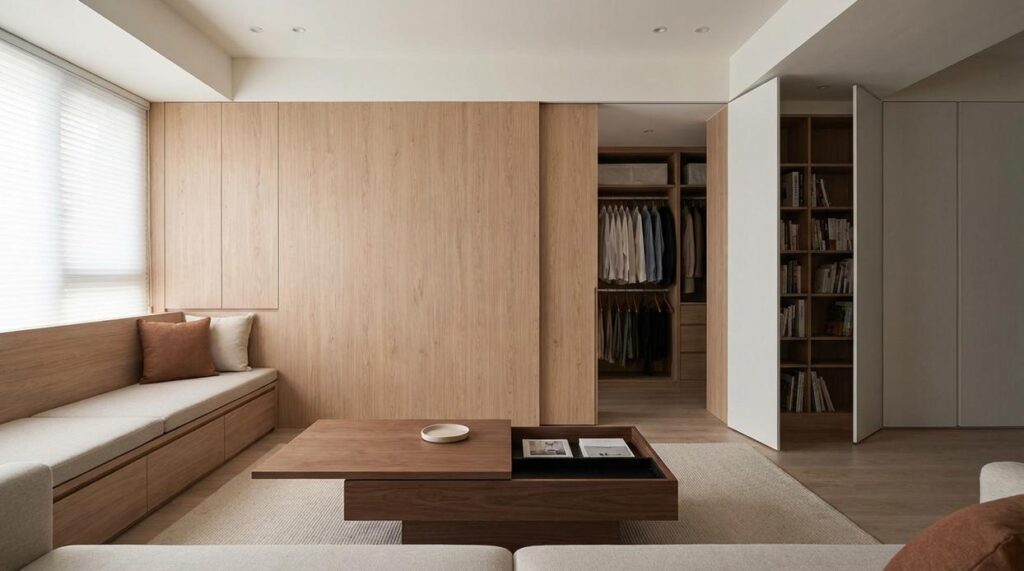
- A lift-top coffee table that converts into a workspace
- A daybed that doubles as a guest bed
In compact urban apartments, case studies from IKEA’s small-space living reports show that dual-purpose furniture can reduce the need for additional pieces by up to 30%. (Marie Kondo would definitely approve.)
Scale Is Everything
Oversized sectionals can overwhelm a room, while too many tiny pieces create visual clutter. Research from the American Society of Interior Designers suggests that fewer, well-proportioned items improve perceived organization. Pro tip: Measure your room and map furniture footprints with painter’s tape before buying.
Go Vertical
Tall, narrow bookcases and floating shelves draw the eye upward, emphasizing ceiling height. Vertical storage also frees floor space—proof that sometimes the smartest move is simply looking up.
Master the Art of Strategic Placement and Flow

Great design isn’t about adding more—it’s about placing what you already have with intention. Let’s break down a few concepts that often confuse homeowners.
Define Zones with Rugs
First, think of a “zone” as a clearly defined purpose within a room—like a conversation area or reading nook. An area rug acts as a visual boundary (without building actual walls). To unify the space, position the rug so the front legs of your main furniture sit on it. This simple move connects separate pieces into one cohesive arrangement. Otherwise, the room can feel like a group of strangers at a party, all standing awkwardly apart.
Create Clear Pathways
Next, consider traffic flow. A “pathway” is simply the natural route people take when walking through a room. Keep these paths unobstructed. Even shifting a coffee table a few inches can improve movement and make a small room look bigger. In other words, space to walk equals space to breathe.
Try the ‘Floating’ Layout
Finally, avoid pushing every piece against the walls. A “floating layout” means pulling furniture slightly inward to create depth and breathing room. Counterintuitive? Maybe. Effective? Absolutely. Sometimes, giving your furniture a little space makes the whole room feel more expansive.
Advanced Decor Hacks to Deceive the Eye
Strategic mirror placement isn’t just about hanging something shiny; it’s about physics. Place a large mirror directly across from a window and you double the daylight while reflecting the outdoor view, essentially creating a second “window.” Designers call this borrowed light—using existing light to amplify brightness (a small room’s secret weapon).
Next, compare materials: a bulky wood coffee table vs. a clear acrylic “ghost” table. Both hold your books and coffee, but acrylic visually disappears, reducing visual weight—the perceived heaviness objects add to a space. That transparency can make a small room look bigger without knocking down walls.
Finally, think big art vs. many small frames. A single oversized piece creates one focal point; a gallery wall can feel busy. When in doubt, go bold (yes, even if it feels dramatic). Remember, scale and light always beat clutter and confusion in small spaces.
Your Small Space, Reimagined and Reclaimed
You came here looking for practical ways to transform your compact space—and now you have the tools to do exactly that. A cramped, cluttered room can feel frustrating and limiting, but it doesn’t have to stay that way. With the right use of color, lighting, layout, and furniture choices, you can make a small room look bigger and more functional without knocking down a single wall.
Don’t let limited square footage limit your comfort. Start with one simple change today—add a large mirror or swap in a leggy coffee table—and watch your space instantly open up. Small tweaks, big impact. Take action now and reclaim your room.
 Director of Community & Partnerships
Ask Eloria Esthova how they got into decor trends and shifts and you'll probably get a longer answer than you expected. The short version: Eloria started doing it, got genuinely hooked, and at some point realized they had accumulated enough hard-won knowledge that it would be a waste not to share it. So they started writing.
What makes Eloria worth reading is that they skips the obvious stuff. Nobody needs another surface-level take on Decor Trends and Shifts, Space Optimization Hacks, In-Depth Guides. What readers actually want is the nuance — the part that only becomes clear after you've made a few mistakes and figured out why. That's the territory Eloria operates in. The writing is direct, occasionally blunt, and always built around what's actually true rather than what sounds good in an article. They has little patience for filler, which means they's pieces tend to be denser with real information than the average post on the same subject.
Eloria doesn't write to impress anyone. They writes because they has things to say that they genuinely thinks people should hear. That motivation — basic as it sounds — produces something noticeably different from content written for clicks or word count. Readers pick up on it. The comments on Eloria's work tend to reflect that.
Director of Community & Partnerships
Ask Eloria Esthova how they got into decor trends and shifts and you'll probably get a longer answer than you expected. The short version: Eloria started doing it, got genuinely hooked, and at some point realized they had accumulated enough hard-won knowledge that it would be a waste not to share it. So they started writing.
What makes Eloria worth reading is that they skips the obvious stuff. Nobody needs another surface-level take on Decor Trends and Shifts, Space Optimization Hacks, In-Depth Guides. What readers actually want is the nuance — the part that only becomes clear after you've made a few mistakes and figured out why. That's the territory Eloria operates in. The writing is direct, occasionally blunt, and always built around what's actually true rather than what sounds good in an article. They has little patience for filler, which means they's pieces tend to be denser with real information than the average post on the same subject.
Eloria doesn't write to impress anyone. They writes because they has things to say that they genuinely thinks people should hear. That motivation — basic as it sounds — produces something noticeably different from content written for clicks or word count. Readers pick up on it. The comments on Eloria's work tend to reflect that.