
If you’re searching for the interior design trends 2026, you want more than a list of passing fads—you want to know what’s truly shaping homes in the year ahead and how to apply those ideas in a way that feels timeless and personal. This article breaks down the key styles, materials, color directions, and space‑saving innovations that are defining modern interiors, so you can confidently plan your next refresh or full redesign.
We’ve analyzed emerging decor movements, studied evolving lifestyle needs, and reviewed insights from leading designers and trend forecasts to separate lasting shifts from short‑lived hype. Whether you’re updating a small apartment or reimagining an entire home, you’ll discover practical guidance, styling techniques, and smart space optimization strategies that turn trend awareness into real‑world results.
By the end, you’ll know exactly which design directions are worth embracing—and how to make them work beautifully in your own space.
Your Home, Reimagined: A Look Ahead to 2026
Planning a home refresh used to mean chasing whatever felt new. I once painted an entire living room millennial pink because it was everywhere (Instagram did it). Six months later, I regretted it.
The real lesson behind interior design trends 2026 is this: trends reflect deeper cultural shifts. In 2026, expect wellness-driven layouts, sustainable materials, and tech that disappears into the background. These aren’t fads; they’re responses to burnout, climate anxiety, and digital overload.
Future-proofing means choosing adaptable furniture, layered lighting, and natural textures. Design for how you live, not likes today.
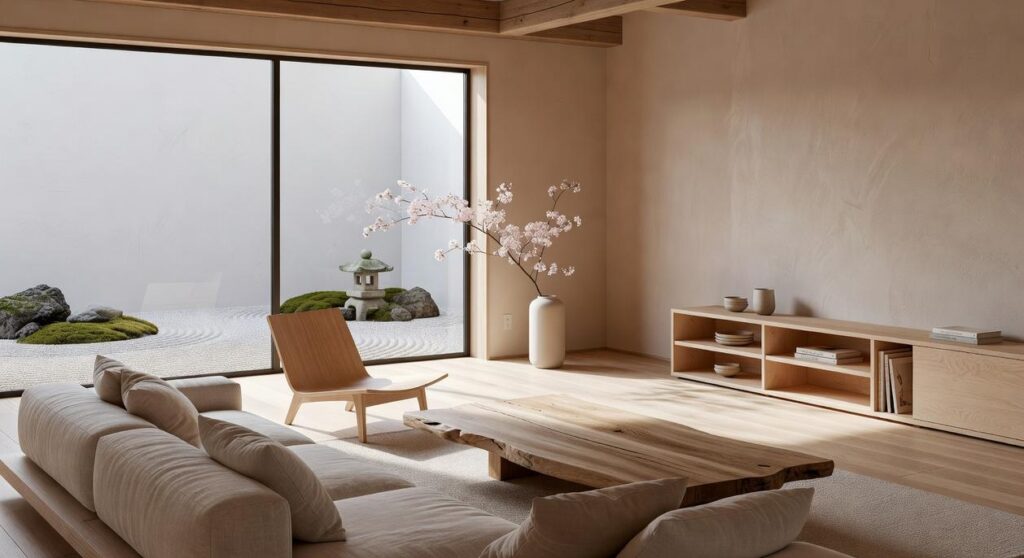
The Sanctuary Palette is more than a mood board; it’s a shift in how we design our homes. What started as a few potted plants has evolved into biophilic architecture—an approach that integrates natural light, cross-ventilation, water elements, and organic materials to create a calming indoor ecosystem. In interior design trends 2026, the palette deepens into terracotta, moss green, deep ochre, and warm browns that feel grounding and restorative. These hues echo clay, forest floors, and sunbaked landscapes (think a Tuscany getaway without the airfare).
If you lack a window view, use a large-scale botanical mural to simulate depth and connection; designers note murals can visually expand compact rooms when perspective is applied correctly (Architectural Digest).
Layering guide:
• Start with a warm beige wall as your base.
• Anchor the room with a terracotta sofa.
• Add moss green cushions, textured throws, and natural wood furniture for depth.
Pro tip: keep metals muted—brushed brass or matte black—to maintain the sanctuary feel. Balance is key; too many dark tones can shrink a space, so offset them with sheer curtains and layered lighting. Done thoughtfully, earth-forged tones transform even small apartments into restorative retreats. Comfort becomes visible, tactile, and lasting. Daily.
Smart and Seamless: The Rise of Multifunctional Spaces
Open-concept living was supposed to “solve” small-space problems. Knock down walls, let everything breathe. But here’s the contrarian truth: wide-open rooms often feel chaotic, not calming. In 2026, zoning—the practice of dividing one room into purposeful areas without permanent walls—will define smarter homes.
Instead of dedicating an entire room to work, relaxation, or dining, modular sofas, fold-away desks, and movable shelving create flexible zones within a single footprint. A reading nook anchored by a floor lamp feels intentional. A pendant light over a compact dining table signals “gather here.” (Lighting is basically the director of your room’s movie.)
Some argue multifunctional spaces feel cluttered. Fair. But that’s where tech-minimalism comes in—integrating smart technology so seamlessly it disappears. Think voice-activated ambient lighting, smart glass that turns opaque for privacy, and consoles with built-in charging ports. No visible wires. No gadget overload.
Look for nesting coffee tables with hidden storage, convertible desks that fold into sleek consoles, and sculptural room dividers that double as shelving. Area rugs further define each zone without building walls.
While many interior design trends 2026 spotlight maximalism, the real luxury is adaptability. Spaces that shift with your day don’t just look good—they work harder (and honestly, shouldn’t they?).
A Return to Craft: Embracing Artisanal and Textured Materials

In a world of fast furniture and algorithm-driven aesthetics, many homeowners are craving something real. The rise of artisanal decor reflects a pushback against mass-produced sameness. Authenticity—design that feels personal, imperfect, and storied—is becoming the heartbeat of interior design trends 2026.
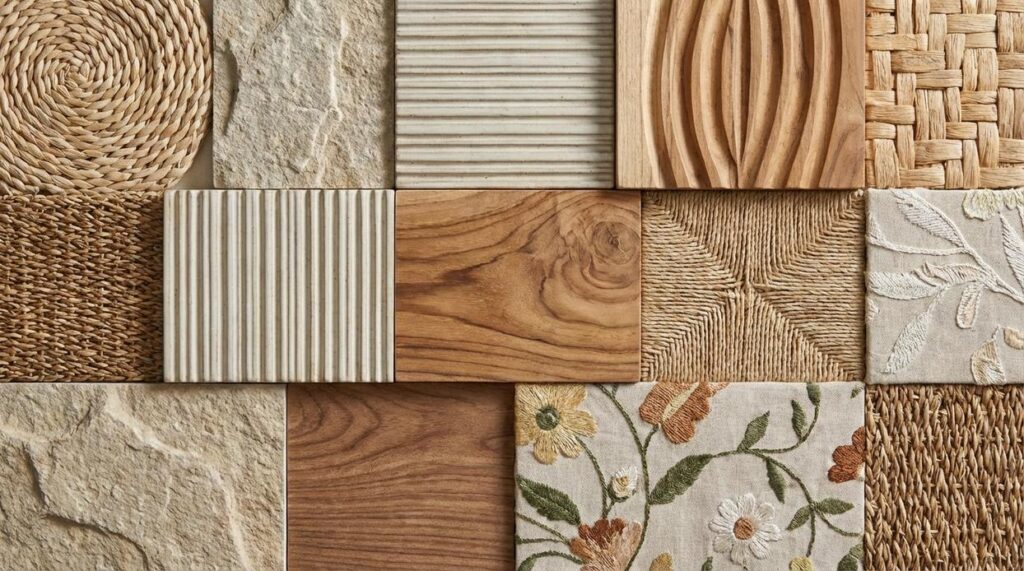
Not everyone is convinced. Some argue handcrafted pieces are pricier and less uniform. True. But that’s precisely the appeal. A heavily veined marble slab or hand-formed zellige tile carries subtle variations that machines can’t replicate (and those “flaws” are the point).
Key Materials to Watch
- Heavily veined marble and travertine
- Rough-hewn wood
- Handmade ceramic tiles (zellige)
- Bouclé upholstery
- Plaster wall finishes
- Woven textiles like jute and rattan
The Power of Tactile Design
Tactile design means layering contrasting textures to create visual and physical depth. Picture a smooth marble coffee table, a nubby bouclé sofa, and a coarse jute rug grounding the space. The mix keeps rooms from feeling flat or sterile.
If you’re hesitant to commit, start small. Try ceramic vases, woven baskets, or hand-knotted throw pillows. (Pro tip: group three varied textures together for instant impact.)
Interestingly, this return to craft pairs naturally with bolder aesthetics explored in from minimalism to maximalism why bold decor is back. Texture makes boldness feel intentional—not chaotic.
Curved Lines and Bold Forms: The New Retro-Futurism
Curved lines and bold forms are redefining modern interiors with a playful confidence that feels both nostalgic and forward-thinking. This aesthetic blends 1970s-inspired curves with futuristic, sculptural shapes—think less “space-age minimalism” and more optimistic, personality-filled design. According to Pinterest Predicts 2025, searches for curved furniture increased by over 45% year-over-year, signaling sustained momentum into interior design trends 2026 (Pinterest Predicts Report, 2025).
Signature Silhouettes
The look centers on instantly recognizable shapes:
- Arched doorways and mirrors
- Serpentine sofas
- Mushroom-shaped lamps
- Chunky, rounded furniture legs
These silhouettes soften a room visually and psychologically; studies in environmental psychology suggest curved forms are often perceived as more welcoming than sharp angles (Vartanian et al., 2013).
Color and Pattern
While shape leads, color supports. A single cobalt blue armchair or a controlled geometric rug keeps the space dynamic without overwhelming it (no one wants their living room to feel like a kaleidoscope).
Some critics argue curves are impractical or trend-driven. Yet case studies from major furniture retailers show rising multi-year sales of rounded sofas, suggesting durability beyond a fleeting fad.
To incorporate the style, start small: one sculptural floor lamp or curved sofa can transform a room—no demolition required.
Crafting Your Personal and Timeless Environment
You’ve explored the major currents shaping interior design trends 2026—now it’s time to make them personal. A timeless home isn’t a showroom; it’s a space that works for your real life (yes, even the messy parts).
Step 1: Choose one feeling. Calm? Bold? Cozy? Define it clearly.
Step 2: Make one small change. Add a sculptural lamp, swap in earthy linen pillows, or rearrange furniture for better flow.
Step 3: Test and adjust. Live with it for a week.
Pro tip: Start with lighting—it transforms a room faster than paint. Small shifts, done thoughtfully, create lasting impact.
Bring Your Space to Life with Confidence
You came here looking for clarity on what’s shaping interior design trends 2026, and now you have a clear vision of what’s ahead. From modern styling techniques to smarter space optimization, you’re better equipped to create a home that feels current, functional, and uniquely yours.
Ignoring evolving trends can leave your space feeling outdated or disconnected from how you truly want to live. The good news? With the right guidance and inspiration, transforming your home doesn’t have to feel overwhelming.
Now it’s time to take action. Start applying these ideas room by room, experiment with new textures and layouts, and refine your space with intention. If you want step-by-step styling insights, expert-backed decor strategies, and proven space-saving hacks trusted by thousands of home enthusiasts, explore our latest guides today and start designing a home that truly reflects you.
 FOUNDER & CEO
There is a specific skill involved in explaining something clearly — one that is completely separate from actually knowing the subject. Veronicay Simpsonita has both. They has spent years working with decor trends and shifts in a hands-on capacity, and an equal amount of time figuring out how to translate that experience into writing that people with different backgrounds can actually absorb and use.
Veronicay tends to approach complex subjects — Decor Trends and Shifts, Pal Modern Interior Techniques, Highlight Hub being good examples — by starting with what the reader already knows, then building outward from there rather than dropping them in the deep end. It sounds like a small thing. In practice it makes a significant difference in whether someone finishes the article or abandons it halfway through. They is also good at knowing when to stop — a surprisingly underrated skill. Some writers bury useful information under so many caveats and qualifications that the point disappears. Veronicay knows where the point is and gets there without too many detours.
The practical effect of all this is that people who read Veronicay's work tend to come away actually capable of doing something with it. Not just vaguely informed — actually capable. For a writer working in decor trends and shifts, that is probably the best possible outcome, and it's the standard Veronicay holds they's own work to.
FOUNDER & CEO
There is a specific skill involved in explaining something clearly — one that is completely separate from actually knowing the subject. Veronicay Simpsonita has both. They has spent years working with decor trends and shifts in a hands-on capacity, and an equal amount of time figuring out how to translate that experience into writing that people with different backgrounds can actually absorb and use.
Veronicay tends to approach complex subjects — Decor Trends and Shifts, Pal Modern Interior Techniques, Highlight Hub being good examples — by starting with what the reader already knows, then building outward from there rather than dropping them in the deep end. It sounds like a small thing. In practice it makes a significant difference in whether someone finishes the article or abandons it halfway through. They is also good at knowing when to stop — a surprisingly underrated skill. Some writers bury useful information under so many caveats and qualifications that the point disappears. Veronicay knows where the point is and gets there without too many detours.
The practical effect of all this is that people who read Veronicay's work tend to come away actually capable of doing something with it. Not just vaguely informed — actually capable. For a writer working in decor trends and shifts, that is probably the best possible outcome, and it's the standard Veronicay holds they's own work to.