An accent wall can completely redefine a room—but with so many accent wall design options available, choosing the right one can quickly feel overwhelming. From subtle texture to bold artistic statements, the possibilities go far beyond a simple coat of paint. This guide explores modern, curated techniques including textured panels, geometric treatments, and large-scale murals to help you navigate your choices with confidence. You’ll discover practical insights tailored to different aesthetics, budgets, and DIY comfort levels, so you can select a feature wall that not only stands out—but truly elevates your entire space.
Mastering the Classic: Paint Techniques and Color Theory
Solid Color Impact
For those exploring the transformative power of an accent wall, whether through paint, panels, or wallpaper, the vibrant inspirations from our article on Home Interior Mintpalhouse can provide the perfect starting point for your design journey.
Sometimes the boldest move is the simplest. A solid accent wall delivers instant focus without architectural changes. Choose a high-contrast hue (navy against crisp white, for example) for drama, or go two shades darker than your base wall for subtle depth (a designer trick rarely mentioned in basic guides). The latter creates dimension without visually shrinking the room—ideal for small spaces. According to color perception studies from the University of Winnipeg, darker tones can make large rooms feel more intimate when balanced with lighter surroundings.
Geometric Patterns & Color Blocking
For sharper personality, explore accent wall design options like chevrons or modern blocks. Use high-quality painter’s tape, press edges with a credit card, and remove tape while paint is slightly damp for crisp lines (patience here pays off). Matte and satin pairings add layered contrast—something most tutorials skip.
Specialty Paint Finishes
Chalkboard paint adds kitchen functionality. Magnetic paint turns kids’ rooms interactive. A high-gloss finish reflects up to 85% more light (Sherwin-Williams data), giving dining rooms subtle glamour—think old Hollywood, minus the paparazzi.
Harnessing Color Psychology
Blues and greens calm (great for bedrooms). Terracotta and mustard create warmth and conversation—like a cozy café scene. Pro tip: Test swatches at different times of day; lighting changes everything.
Wallpaper and Murals: From Subtle Patterns to Bold Statements
Choosing wallpaper is a bit like choosing a soundtrack for your home. Traditional paste-the-wall paper is the vinyl record—steady, lasting, and deeply rooted. Peel-and-stick is the streaming playlist—flexible, commitment-light, and perfect for renters or anyone who redecorates as often as seasons change. (We all know someone who swaps throw pillows monthly.) Peel-and-stick’s repositionable adhesive means fewer regrets and faster updates, especially when exploring accent wall design options.
The Power of Pattern
Patterns act like clothing for your walls. Large-scale florals drape a room in romance, much like a flowing gown. Sharp geometrics feel tailored and modern—think crisp suits and clean lines. Abstract prints? They’re the artsy statement jacket that sparks conversation. When selecting, echo shapes or tones already present in your decor so the room feels harmonious, not chaotic. For deeper cohesion, revisit the art of layering textures for a visually rich interior.
Murals, meanwhile, are built-in masterpieces. A sweeping landscape or bold abstract creates depth the way a window opens to another world. Some argue murals overwhelm small spaces. Yet, like a well-placed mirror, the right design can expand a room visually—turning one wall into pure atmosphere.
Embrace Texture: Wood, Panels, and Architectural Details
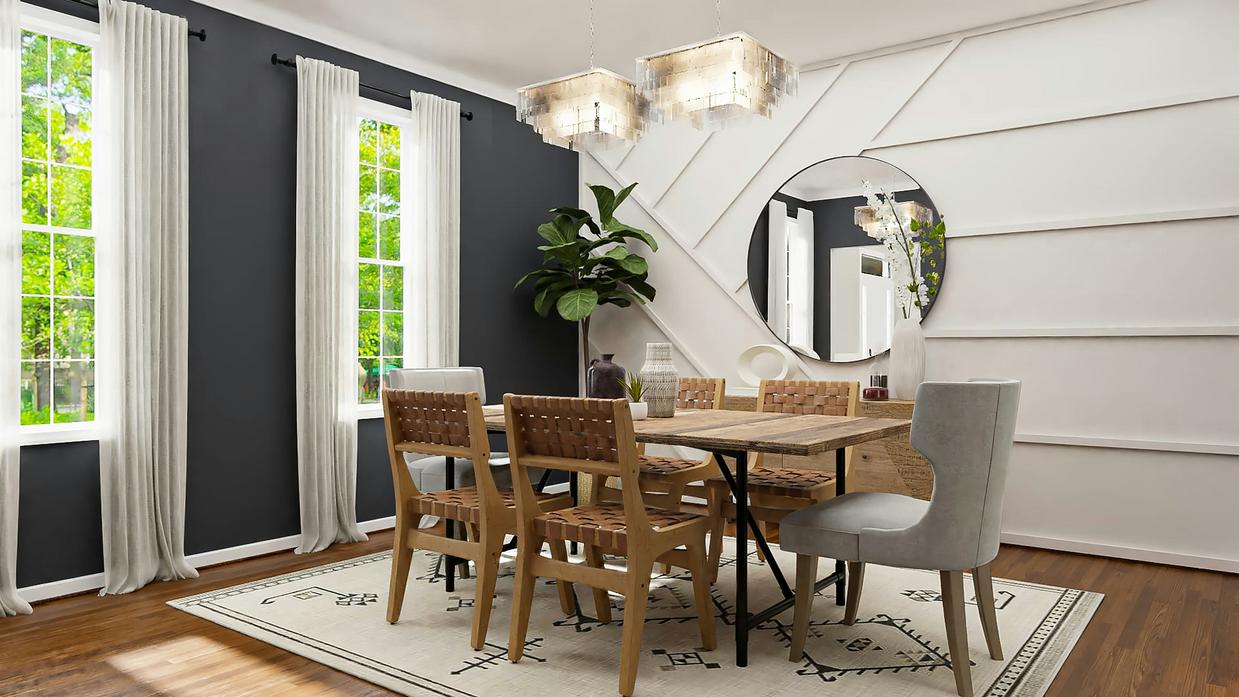
Flat, builder-grade walls are the design equivalent of plain toast. Functional? Sure. Inspiring? Not even close. If you’ve ever stared at a blank wall thinking, Why does this room feel unfinished? — you’re not alone.
Architectural Moulding
Board and batten (a grid of vertical boards with narrow strips covering seams), picture frame moulding, and wainscoting (decorative paneling on the lower portion of walls) add instant structure. These traditional details bring rhythm and proportion to a room. Paint them the same color as the wall for subtle depth, or go bold with contrast for drama. Some argue moulding feels “too formal” for modern homes. But paired with streamlined furniture, it reads tailored — not stuffy (think less Victorian parlor, more Nancy Meyers set).
Modern Wood Slat Walls
Vertical wood slats, often called Akupanels, are everywhere — and for good reason. They introduce warmth while keeping a clean Scandinavian or Japandi aesthetic. Beyond looks, slatted panels can improve acoustics by reducing echo (National Research Council Canada). If you’re tired of hearing every TV sound bounce around, this matters.
Shiplap Reimagined
Yes, shiplap had its farmhouse moment. But installing it vertically draws the eye upward, making ceilings feel taller. Finishes range from raw wood to crisp white — even painted black for edge. It’s one of the most versatile accent wall design options available.
3D Wall Panels
Made from PVC, gypsum, or plant fiber, 3D panels feature geometric or organic patterns that play with light and shadow throughout the day. The result? A wall that actually feels alive (and never boring again).
Unconventional Materials for a One-of-a-Kind Wall
The Personalized Gallery Wall
Think beyond frames—it’s a curated design statement. A cohesive gallery wall blends art, photos, and objects under a unifying thread like a consistent color palette or frame finish. Designers often rely on the “rule of three” for balance (a principle widely used in visual composition studies, per the Interaction Design Foundation). Try:
- Black frames with neutral mats for a modern grid
- Mixed media (prints, textiles, small sculptures) in one tonal family
Pro tip: Lay everything on the floor first to test spacing (your future self will thank you).
Luxe Upholstered Panels
Fabric wall panels add softness and function. According to the Noise Reduction Coefficient (NRC) standards, upholstered surfaces can significantly absorb sound, making them ideal behind beds. Velvet feels dramatic, bouclé adds texture, and linen delivers relaxed luxury.
Tile Beyond the Backsplash
Zellige, patterned cement, or mirrored tiles aren’t just kitchen staples. As accent wall design options, they boost durability and reflect light—mirrored tiles can increase perceived brightness by up to 30% (U.S. Department of Energy).
Designing the Perfect Focal Point for Your Home
From the transformative power of paint to the pattern play of wallpaper, the depth of texture, and the creativity of unconventional materials, you now have a full spectrum of possibilities to craft a stunning focal point. The perfect accent wall isn’t about trends—it’s about choosing a look that reflects your personality and supports the room’s purpose. When done thoughtfully, it brings harmony, energy, and intention into your space. Take a fresh look at your room, decide which option excites you most, and start planning your transformation today. Your dream space begins with one bold, beautiful choice.
 FOUNDER & CEO
There is a specific skill involved in explaining something clearly — one that is completely separate from actually knowing the subject. Veronicay Simpsonita has both. They has spent years working with decor trends and shifts in a hands-on capacity, and an equal amount of time figuring out how to translate that experience into writing that people with different backgrounds can actually absorb and use.
Veronicay tends to approach complex subjects — Decor Trends and Shifts, Pal Modern Interior Techniques, Highlight Hub being good examples — by starting with what the reader already knows, then building outward from there rather than dropping them in the deep end. It sounds like a small thing. In practice it makes a significant difference in whether someone finishes the article or abandons it halfway through. They is also good at knowing when to stop — a surprisingly underrated skill. Some writers bury useful information under so many caveats and qualifications that the point disappears. Veronicay knows where the point is and gets there without too many detours.
The practical effect of all this is that people who read Veronicay's work tend to come away actually capable of doing something with it. Not just vaguely informed — actually capable. For a writer working in decor trends and shifts, that is probably the best possible outcome, and it's the standard Veronicay holds they's own work to.
FOUNDER & CEO
There is a specific skill involved in explaining something clearly — one that is completely separate from actually knowing the subject. Veronicay Simpsonita has both. They has spent years working with decor trends and shifts in a hands-on capacity, and an equal amount of time figuring out how to translate that experience into writing that people with different backgrounds can actually absorb and use.
Veronicay tends to approach complex subjects — Decor Trends and Shifts, Pal Modern Interior Techniques, Highlight Hub being good examples — by starting with what the reader already knows, then building outward from there rather than dropping them in the deep end. It sounds like a small thing. In practice it makes a significant difference in whether someone finishes the article or abandons it halfway through. They is also good at knowing when to stop — a surprisingly underrated skill. Some writers bury useful information under so many caveats and qualifications that the point disappears. Veronicay knows where the point is and gets there without too many detours.
The practical effect of all this is that people who read Veronicay's work tend to come away actually capable of doing something with it. Not just vaguely informed — actually capable. For a writer working in decor trends and shifts, that is probably the best possible outcome, and it's the standard Veronicay holds they's own work to.