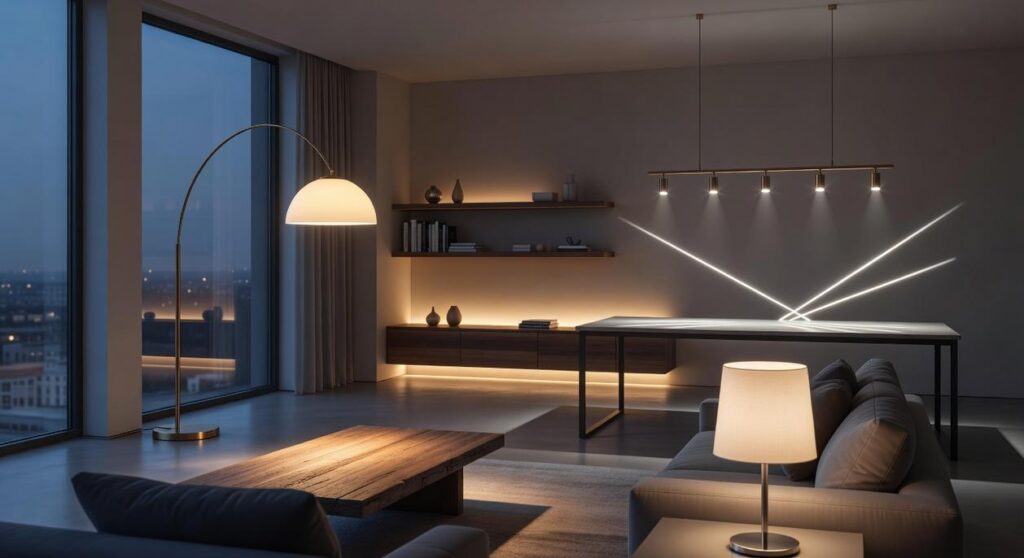

If you’re searching for living room lighting ideas, you’re likely looking for more than just a stylish fixture—you want a space that feels warm, functional, and thoughtfully designed. The right lighting can completely transform your living room, influencing mood, enhancing décor, and even making small spaces feel larger and more inviting.
This article is designed to help you navigate the most effective lighting strategies, from layering ambient, task, and accent lighting to choosing fixtures that complement modern interiors and evolving décor trends. We’ll break down practical techniques, space-optimization tips, and design-forward ideas that work in real homes—not just in showrooms.
Our guidance is rooted in extensive research on interior styling principles, current décor movements, and proven space-enhancing methods. Whether you’re refreshing a single corner or redesigning your entire living room, you’ll find clear, actionable ideas to help you create a beautifully lit space that feels both functional and inspiring.
Build Light in Layers
Most people rely on one ceiling fixture (a design crime, in my opinion). Real comfort comes from layered lighting—combining ambient, task, and accent sources. Ambient lighting means illumination; think flush mounts or recessed cans. Task lighting targets activities like reading—floor lamps beside sofas work wonders. Accent lighting highlights art or shelves, adding depth like a movie set.
Some argue overhead lights are efficient enough. Sure, they’re practical. But practical isn’t inviting. Explore living room lighting ideas that mix dimmers, bulbs (around 2700K), and table lamps at heights.
- Pro tip: Use dimmers to control mood
The Foundation: Mastering Layered Lighting
Professional interior design begins with one core principle: layering. In other words, a well-lit room isn’t powered by a single overhead bulb (we’ve all lived that reality). Instead, it combines three distinct lighting types, each serving a measurable function and delivering a clear benefit.
Layer 1 – Ambient Light
First, ambient light provides overall illumination. This foundational layer typically includes flush mounts, chandeliers, or evenly spaced recessed lights (often 4–6 feet apart for balanced distribution). The goal is uniform brightness without harsh glare. As a result, the room feels comfortable and usable at any time of day.
Layer 2 – Task Light
Next, task lighting delivers focused brightness exactly where you need it. Floor lamps beside reading chairs, table lamps near sofas, or adjustable pharmacy lamps over hobby tables reduce eye strain and improve precision. Notably, bulbs in the 400–800 lumen range work well for most seated activities. Function meets comfort here.
Layer 3 – Accent Light
Finally, accent lighting adds depth and drama. Picture lights, directional track heads, or discreet uplights behind plants create contrast and dimension. Typically, accent lighting should be three times brighter than ambient lighting to effectively highlight features (Illuminating Engineering Society).
| Layer | Common Fixtures | Primary Benefit |
|---|---|---|
| Ambient | Chandeliers, recessed cans |
Overall visibility |
| Task | Floor, table, pharmacy lamps| Reduced eye strain |
| Accent | Track lights, picture lights| Visual depth and emphasis |
When thoughtfully combined, these elements form the backbone of effective living room lighting ideas. Together, they transform a flat space into one that feels intentional, flexible, and visually engaging.
Choosing Your Main Light Source: Ceiling Fixture Ideas
I once installed a tiny pendant light in a large living room and couldn’t figure out why the space felt… underwhelming. (It looked like a lone balloon floating in a gymnasium.) That’s when I learned the hard way: scale matters.
Chandeliers & Pendants
Chandeliers and pendants act as a room’s focal point—think of them as its “jewelry.” A chandelier is a multi-arm decorative fixture, while a pendant is a single light that hangs from the ceiling. Both should be proportional to your space; designers often suggest adding the room’s length and width (in feet) and using that number in inches as a diameter guide (Architectural Digest). From modern Sputnik styles to classic crystal, your choice sets the tone instantly.
Flush & Semi-Flush Mounts
If your ceilings are under 9 feet, flush and semi-flush mounts are practical heroes. “Flush” sits directly against the ceiling; “semi-flush” drops slightly below. They provide strong ambient light—meaning overall room illumination—without crowding vertical space.
Recessed Lighting
For a minimalist look, recessed lights (fixtures installed into the ceiling) create even brightness. I always recommend dimmers—they extend bulb life and save energy (U.S. Department of Energy). Place them to wash walls with light, not spotlight the floor. It’s one of my favorite living room lighting ideas for a clean, gallery-like feel.
Adding Function and Style at Eye-Level
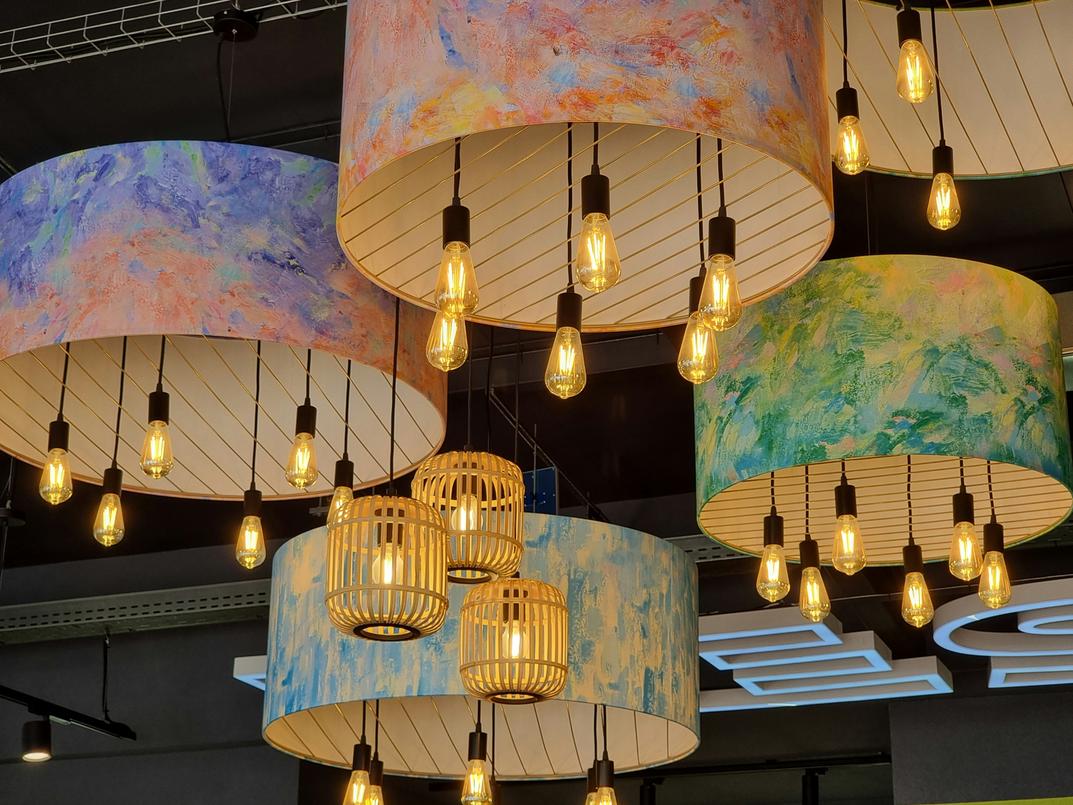
Great lighting doesn’t just brighten a room; it shapes how it feels. According to the American Lighting Association, layered lighting (a mix of ambient, task, and accent sources) improves both visual comfort and functionality in living spaces. That’s why floor and table lamps matter more than most people think.
The Role of Floor Lamps
Floor lamps are versatile task and ambient lighting workhorses. For example, an arc lamp can elegantly hover over a sofa, delivering overhead-style light without hardwiring (perfect for renters). Meanwhile, a tripod lamp introduces sculptural height—almost like functional art. A torchiere, on the other hand, directs light upward, bouncing it off the ceiling to create soft, indirect illumination. Designers often recommend this technique because indirect light reduces harsh shadows and eye strain (IES Lighting Handbook).
Some argue that recessed ceiling lights alone are enough. However, studies show layered sources reduce glare and create a more balanced luminance ratio, which feels calmer and more inviting.
The Importance of Table Lamps
Table lamps anchor seating areas while providing focused task lighting. Ensure the bottom of the shade sits at or just below eye level when seated to prevent glare.
Mixing Materials and Shapes
Mix metals, ceramics, and woods confidently. Cohesion comes from a shared element—color, silhouette, or finish—not sameness. For more depth, see accent walls explained paint panels or wallpaper.
When refining your living room lighting ideas, remember: balance beats uniformity every time.
Modern Controls and Advanced Techniques
First, let’s compare impact versus investment. A standard switch simply turns lights on or off. A dimmer, on the other hand, gives you control over intensity (brightness level), letting one fixture serve multiple purposes. Bright for cleaning, low for movie night—same light, different mood. Dimmers are affordable and widely recommended as one of the most cost-effective lighting upgrades (U.S. Department of Energy notes lighting controls can reduce energy use).
Meanwhile, smart lighting takes this further. Traditional bulbs offer one color temperature (the warmth or coolness of light). Smart bulbs let you shift from cool white for focus to warm amber for relaxing evenings. Think productivity mode versus Netflix mode. However, some argue smart systems are pricey and complex. Fair—but prices have dropped significantly in recent years (Statista reports steady growth and adoption globally), and setup is increasingly user-friendly.
Finally, visible fixtures versus hidden LED strips: exposed lighting illuminates; concealed lighting elevates. Tuck strips behind shelves or TVs for layered living room lighting ideas that feel subtle, modern, and intentionally designed.
Bringing Your Lighting Plan to Life
In many city apartments—from Brooklyn brownstones to downtown Chicago condos—a single overhead fixture still does all the work. Some argue that’s enough (especially if square footage is tight). But one ceiling light creates glare and cavernous shadows, flattening your finishes and making movie night feel like a boardroom.
A balanced plan layers:
- Ambient lighting (overall illumination, often recessed cans or a flush mount)
- Task lighting (focused light for reading or working)
- Accent lighting (fixtures that highlight art, millwork, or texture)
Designers call this “layering,” and it’s the backbone of smart living room lighting ideas. Add dimmers to adjust lumens by activity. Start small—install a reading lamp or swap in a dimmer—and notice the shift immediately.
Bring Your Living Room to Life
You started this guide looking for practical, stylish ways to transform your space with smarter living room lighting ideas—and now you have them. From layered lighting techniques to space-enhancing fixtures and mood-setting accents, you’ve seen how the right lighting can completely change the look and feel of your living room.
If your space has ever felt too dark, too flat, or simply uninspiring, you now know the real issue isn’t your furniture—it’s your lighting strategy. The right combination of ambient, task, and accent lighting solves that frustration and turns an ordinary room into a warm, functional, beautifully balanced space.
Now it’s time to take action. Start by assessing your current layout, identify one poorly lit area, and upgrade it with a layered lighting approach. Even one strategic change can dramatically elevate your room.
For more expert-backed living room lighting ideas, trend insights, and space-saving styling techniques trusted by thousands of modern home enthusiasts, explore our in-depth decor guides today. Don’t settle for dull lighting—refresh your space now and create a living room that truly shines.
 Head of Content Strategy
There is a specific skill involved in explaining something clearly — one that is completely separate from actually knowing the subject. Fredrickien Hunteron has both. They has spent years working with decor trends and shifts in a hands-on capacity, and an equal amount of time figuring out how to translate that experience into writing that people with different backgrounds can actually absorb and use.
Fredrickien tends to approach complex subjects — Decor Trends and Shifts, Pal Modern Interior Techniques, Space Optimization Hacks being good examples — by starting with what the reader already knows, then building outward from there rather than dropping them in the deep end. It sounds like a small thing. In practice it makes a significant difference in whether someone finishes the article or abandons it halfway through. They is also good at knowing when to stop — a surprisingly underrated skill. Some writers bury useful information under so many caveats and qualifications that the point disappears. Fredrickien knows where the point is and gets there without too many detours.
The practical effect of all this is that people who read Fredrickien's work tend to come away actually capable of doing something with it. Not just vaguely informed — actually capable. For a writer working in decor trends and shifts, that is probably the best possible outcome, and it's the standard Fredrickien holds they's own work to.
Head of Content Strategy
There is a specific skill involved in explaining something clearly — one that is completely separate from actually knowing the subject. Fredrickien Hunteron has both. They has spent years working with decor trends and shifts in a hands-on capacity, and an equal amount of time figuring out how to translate that experience into writing that people with different backgrounds can actually absorb and use.
Fredrickien tends to approach complex subjects — Decor Trends and Shifts, Pal Modern Interior Techniques, Space Optimization Hacks being good examples — by starting with what the reader already knows, then building outward from there rather than dropping them in the deep end. It sounds like a small thing. In practice it makes a significant difference in whether someone finishes the article or abandons it halfway through. They is also good at knowing when to stop — a surprisingly underrated skill. Some writers bury useful information under so many caveats and qualifications that the point disappears. Fredrickien knows where the point is and gets there without too many detours.
The practical effect of all this is that people who read Fredrickien's work tend to come away actually capable of doing something with it. Not just vaguely informed — actually capable. For a writer working in decor trends and shifts, that is probably the best possible outcome, and it's the standard Fredrickien holds they's own work to.