I’ve spent years watching people walk into houses that should feel like home but somehow don’t.
You probably have a Pinterest board full of beautiful rooms. Maybe you’ve bought things you thought would help. But your space still doesn’t feel right.
Here’s the thing: interior design isn’t about making your home look like a magazine spread. It’s about creating a space that actually works for how you live.
Most people think they need a bigger budget or a complete overhaul. That’s not usually the problem. The problem is understanding what makes a space feel good to be in.
I’m going to show you why certain rooms pull you in while others push you away. And more importantly, how to fix it in your own home.
We focus on the principles that actually matter at mintpaldecor. Not trends that’ll look dated in six months. The foundational stuff that makes any space work better.
You’ll learn what creates that feeling of “home” you’re chasing. The styling essentials that make a difference. And how to bridge the gap between what you see online and what’s possible in your actual space.
No fluff about throwing pillows solving everything. Just what works.
The Psychology of Space: How Design Influences Your Daily Life
Your space is talking to you.
Every morning when you walk into your kitchen. Every evening when you collapse on your couch. Your environment is sending signals that shape how you feel.
Most people don’t notice this. They blame their mood on work stress or lack of sleep. But I’ve seen what happens when someone changes their space. The shift is real.
Your walls affect your mind more than you think.
Take color. Blues and greens calm you down because they mirror nature (your brain still thinks you’re looking at sky and trees). Warmer tones like terracotta or mustard? They wake you up and get you moving.
I’m not saying you need to repaint everything tomorrow. But if you’re always anxious in your bedroom, those bright red accents might be working against you.
Here’s what most people miss though.
It’s not just about making things pretty. It’s about flow and function. When your layout fights you every day, you feel it. You just don’t realize why you’re frustrated.
A well-designed space removes friction. You’re not hunting for your keys or tripping over furniture. Your morning routine becomes smoother. Your evenings feel calmer.
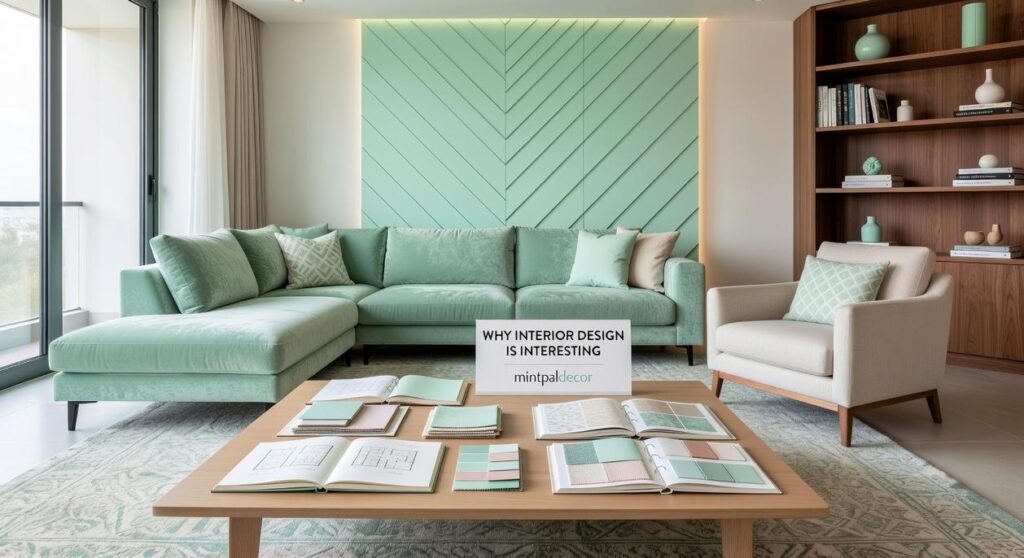
This is why interior design is interesting mintpaldecor. It’s not decoration. It’s about building an environment that supports how you actually live.
After you understand this connection, you’ll start noticing it everywhere. And you’ll probably want to know which changes make the biggest difference first.
Core Principles: The Building Blocks of Great Interior Design
Balance and Harmony: Creating a Sense of Order
I learned this the hard way back in 2018 when I moved into my first Portland apartment.
I threw furniture everywhere. Nothing matched. The whole place felt off.
That’s when I figured out what balance actually means. It’s not about making everything identical on both sides of a room (though you can do that). It’s about making sure visual weight feels right.
Symmetrical balance is the easy route. You put matching lamps on either side of a sofa. Done. Your brain reads it as orderly and calm.
Asymmetrical balance takes more thought. You might place a tall plant on one side of a fireplace and balance it with a low chair and side table on the other. Different objects, same visual weight.
Here’s what works for me. I repeat colors and shapes throughout a space. If you have a navy pillow on your sofa, echo that navy in artwork across the room. Your eye connects the dots and the whole space feels like it belongs together.
Scale and Proportion: Getting the Size Right
You know what kills a room faster than anything?
Furniture that’s too small.
I see this constantly. Someone buys a tiny rug for a big living room (it should go under at least the front legs of your furniture). Or they pick a coffee table that looks like doll furniture next to a full-size sectional. When decorating a gaming space, it’s essential to choose pieces that complement the scale of your room, much like how Mintpaldecor emphasizes the importance of selecting the right size rug or coffee table to create a harmonious atmosphere. When decorating a gaming space, it’s essential to choose pieces that complement each other, much like how the vibrant styles of Mintpaldecor can transform a room from drab to dynamic.
After spending three months redesigning my own living room, I figured out the rule. Your furniture needs to fit the room’s size and ceiling height.
A low-slung sofa works great in a room with eight-foot ceilings. Put that same sofa in a space with twelve-foot ceilings and it disappears.
The fix is simple but not obvious. Measure your room. Then measure again before you buy anything.
Rhythm and Repetition: Guiding the Eye
Think about how you actually look at a room when you walk in.
Your eye doesn’t just stop. It moves around, looking for patterns and connections.
I use this all the time at mintpaldecor. If I place three gold frames in different spots around a room, your eye follows them. That creates rhythm.
You can do this with color too. Repeat the same shade in pillows, artwork, and a throw blanket. Suddenly the room feels intentional instead of random.
Patterns work the same way. If you have a geometric rug, echo that geometry in your curtains or cushions (just don’t go overboard or it gets busy).
Emphasis and Focal Points: Creating a Center of Attention I cover this topic extensively in What Interior Doors Are Trending Mintpaldecor.
Every room needs somewhere for your eye to land first.
Without a focal point, a space feels scattered. You walk in and don’t know where to look.
Sometimes the room gives you the focal point. A fireplace. A big window with a view. An accent wall.
Other times you have to create one yourself. I’ve used a large piece of art, an unusual light fixture, or a statement furniture piece (like a velvet sofa in a bold color).
Here’s the thing though. You only get one main focal point per room. Pick two and they compete. Your eye bounces back and forth and nothing feels settled.
Once you have your focal point, arrange everything else to support it. Point your furniture toward it. Use lighting to highlight it.
That’s why interior design is interesting mintpaldecor keeps coming back to these principles. They’re not rules you follow blindly. They’re tools that help you make spaces that actually feel good to be in.
Modern Techniques: Bringing Your Vision to Life

You walk into a room and something just clicks.
The space feels right. Comfortable but put together. Personal without being cluttered.
That’s not luck. It’s technique.
I’m going to show you three methods that’ll take your space from flat to finished. These aren’t complicated designer secrets. They’re practical approaches that actually work.
The Art of Layering
Think about how a room feels when you step inside.
The best spaces hit multiple senses at once. Your eyes catch the soft linen curtains against rough brick. Your hand runs across smooth wood next to cool metal hardware. The lamp in the corner casts warm light while the overhead fixture keeps things bright enough to read.
That’s layering.
Start with your textures. I like pairing velvet pillows with a nubby linen sofa. Or placing a chunky knit throw over leather. The contrast makes each material stand out more.
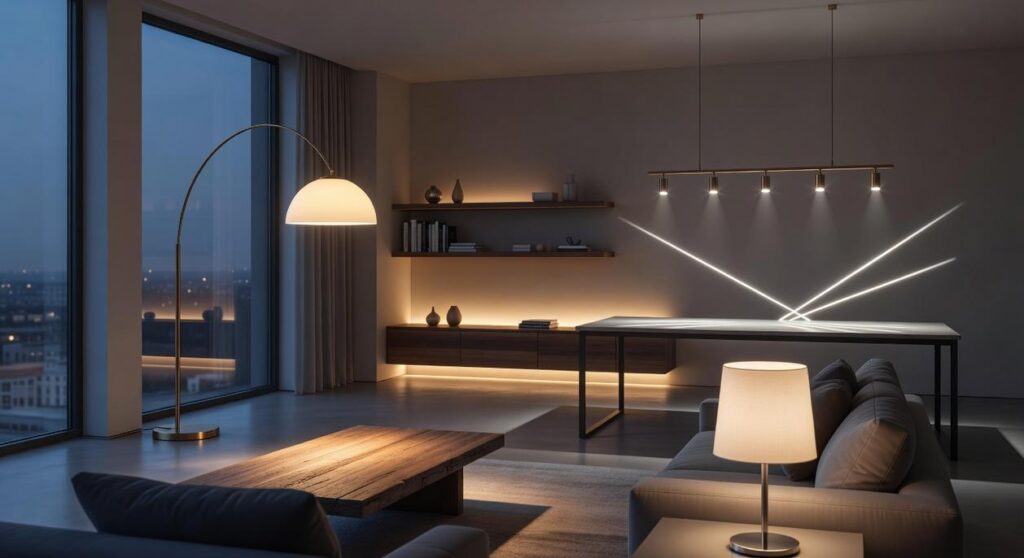
Then add your lighting in three layers. Ambient light fills the room (think ceiling fixtures). Task lighting helps you work (desk lamps, reading lights). Accent lighting creates mood (picture lights, candles, that lamp you love). For those looking to elevate their gaming space, House Decoration Advice Mintpaldecor emphasizes the importance of layering your lighting to enhance both functionality and ambiance. For those looking to elevate their gaming space, House Decoration Advice Mintpaldecor offers invaluable tips on how to harmonize lighting layers to create the perfect atmosphere for both gaming and relaxation.
Finish with your soft goods. Rugs anchor the space. Throws add warmth. Pillows bring in color and comfort.
When you layer right, the room feels full without feeling busy.
The 60-30-10 Color Rule
Here’s why interior design is interesting mintpaldecor makes color choices so much easier.
Pick three colors. Just three.
Your dominant color covers 60% of the room. Usually that’s your walls. Maybe a large sofa if your walls stay neutral.
Your secondary color takes up 30%. That’s your furniture, curtains, or a big area rug.
Your accent color gets the final 10%. Pillows, artwork, that ceramic vase you found at the flea market.
This formula keeps things balanced. You get variety without chaos.
Mixing Styles with Confidence
Some people say you should pick one style and stick with it.
But that’s how you end up with a room that looks like a catalog page. Pretty but soulless.
I say mix it up. Just do it with intention.
Start with one style as your base. Let’s say modern. Clean lines, simple shapes, neutral palette. If this resonates with you, I dig deeper into it in How to Be Better at Interior Design Mintpaldecor.
Now add vintage pieces that share similar qualities. A mid-century chair works because the lines are still clean. An antique mirror with a simple frame fits because it’s not too fussy.
What doesn’t work? Throwing together pieces that fight each other. An ornate French provincial dresser next to industrial metal shelving. The visual weight is too different.
The trick is finding common threads. Maybe it’s color. Maybe it’s the level of detail. Maybe it’s the era.
When you mix with purpose, your space tells a story instead of shouting random words.
Space Optimization Hacks for a More Functional Home
Your home feels cramped.
I hear this all the time. You’ve got the furniture, you’ve got the stuff, but somehow it all feels like too much in too little space.
Here’s what most people don’t realize. You don’t need more square footage. You just need to work with what you’ve got differently.
Making Small Spaces Feel Larger
Start with mirrors. A large mirror on the right wall doubles your light and makes any room feel twice as big. I put one across from my living room window and the difference was immediate.
Light colors help too. Whites, soft grays, and pastels bounce light around instead of absorbing it. And here’s a trick that surprised me: furniture with exposed legs. When you can see the floor underneath a sofa or chair, your brain reads the room as bigger. (It’s weird but it works.)
The Power of Multi-Functional Furniture
I’m talking about pieces that earn their keep.
A storage ottoman holds your blankets and gives you somewhere to put your feet. An extendable dining table seats two on Tuesday and eight on Saturday. A sleeper sofa means your office can become a guest room without the commitment.
This is why interior design is interesting mintpaldecor focuses on these solutions. They actually solve problems instead of just looking good in photos.
Thinking Vertically
Most people forget about their walls.
Floor space is limited. Wall space? You’ve got plenty. Tall bookshelves pull your eye up and make ceilings feel higher. Floating shelves give you storage without eating up room. Wall-mounted organizers keep your counters clear. To maximize your wall space while infusing style into your gaming setup, consider the stunning aesthetics of Mintpaldecor Home Decoration by Myinteriorpalace, which seamlessly blends functionality with creativity. To maximize your wall space while infusing style into your gaming setup, consider incorporating the eye-catching Mintpaldecor Home Decoration by Myinteriorpalace, which adds a unique flair and functionality to your environment.
The best part? You’re using space that was just sitting there doing nothing.
For more ideas, check out this house decoration advice mintpaldecor guide.
Crafting a Home That Inspires You
You came here to understand what makes interior design worth your time.
Now you know. It’s about creating a home that feels like yours and works with how you actually live.
The gap between a space that feels off and a home you love can seem huge. I get it. You look around and wonder where to even start.
But you have what you need now. Balance keeps your rooms from feeling chaotic. Layering adds depth without clutter. Smart space optimization makes every inch count.
These aren’t just design buzzwords. They’re practical tools that work in real homes.
You don’t need to overhaul everything at once. Pick one room or just a corner that’s been bugging you.
Try one thing today. Move that chair. Add a throw pillow. Swap out a light fixture.
Why interior design is interesting is that small changes build on each other. What starts as a single update becomes a space that supports you.
Your home should work for you. Start small and watch what happens.
 Director of Community & Partnerships
Ask Eloria Esthova how they got into decor trends and shifts and you'll probably get a longer answer than you expected. The short version: Eloria started doing it, got genuinely hooked, and at some point realized they had accumulated enough hard-won knowledge that it would be a waste not to share it. So they started writing.
What makes Eloria worth reading is that they skips the obvious stuff. Nobody needs another surface-level take on Decor Trends and Shifts, Space Optimization Hacks, In-Depth Guides. What readers actually want is the nuance — the part that only becomes clear after you've made a few mistakes and figured out why. That's the territory Eloria operates in. The writing is direct, occasionally blunt, and always built around what's actually true rather than what sounds good in an article. They has little patience for filler, which means they's pieces tend to be denser with real information than the average post on the same subject.
Eloria doesn't write to impress anyone. They writes because they has things to say that they genuinely thinks people should hear. That motivation — basic as it sounds — produces something noticeably different from content written for clicks or word count. Readers pick up on it. The comments on Eloria's work tend to reflect that.
Director of Community & Partnerships
Ask Eloria Esthova how they got into decor trends and shifts and you'll probably get a longer answer than you expected. The short version: Eloria started doing it, got genuinely hooked, and at some point realized they had accumulated enough hard-won knowledge that it would be a waste not to share it. So they started writing.
What makes Eloria worth reading is that they skips the obvious stuff. Nobody needs another surface-level take on Decor Trends and Shifts, Space Optimization Hacks, In-Depth Guides. What readers actually want is the nuance — the part that only becomes clear after you've made a few mistakes and figured out why. That's the territory Eloria operates in. The writing is direct, occasionally blunt, and always built around what's actually true rather than what sounds good in an article. They has little patience for filler, which means they's pieces tend to be denser with real information than the average post on the same subject.
Eloria doesn't write to impress anyone. They writes because they has things to say that they genuinely thinks people should hear. That motivation — basic as it sounds — produces something noticeably different from content written for clicks or word count. Readers pick up on it. The comments on Eloria's work tend to reflect that.