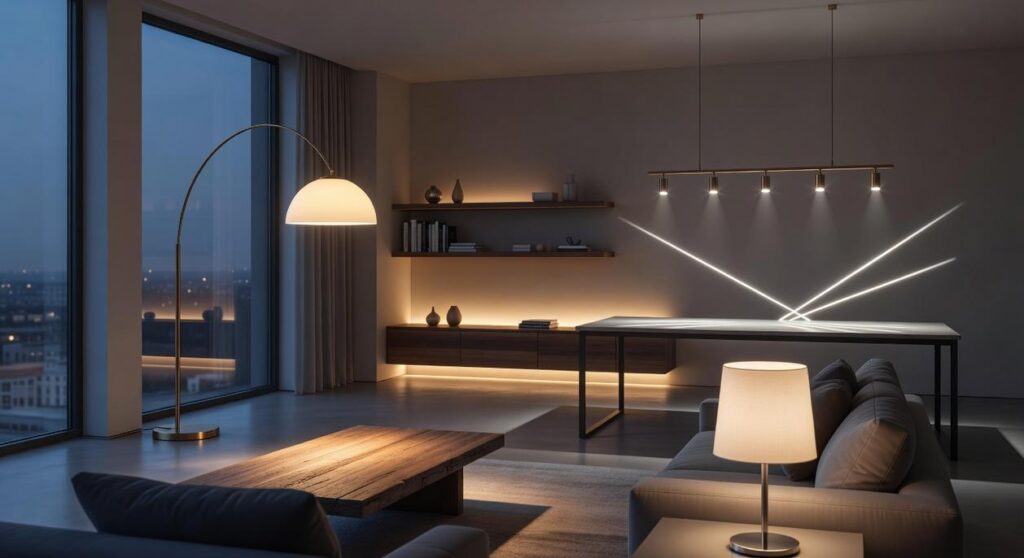

If you’ve been staring at blank or cluttered shelving and wondering how to bring it all together, you’re in the right place. This guide on how to style shelves is designed to give you clear, practical direction—whether you’re working with built-ins, floating shelves, or bookcases that need a refresh.
Many homeowners struggle to strike the right balance between decorative and functional. Too much styling feels crowded. Too little feels unfinished. In this article, you’ll learn how to layer objects, vary heights and textures, create visual balance, and use negative space intentionally—so your shelves look curated, not chaotic.
Our approach is grounded in proven interior styling principles, trend research, and techniques used by professional decorators to create cohesive, magazine-worthy spaces. By the end, you’ll have actionable steps and easy formulas you can apply immediately to transform any shelf into a polished focal point.
From Cluttered to Curated: A Guide to Perfect Shelves
I used to treat my shelves like a holding zone for mail, mismatched candles, and the occasional lonely sock. Over time, they became clutter magnets instead of showcases. If that sounds familiar, you’re not alone. However, learning how to style shelves changed everything.
First, edit ruthlessly. Remove items that don’t serve a purpose or spark joy. Next, group objects in odd numbers to create visual balance. Then, vary height and texture for harmony.
These professional styling principles help you arrange with confidence, reflect personality, and transform shelves into intentional focal points.
The Foundation: Declutter and Define Your Collection
If your shelves feel chaotic (and slightly judgmental every time you walk by), you’re not alone. The biggest mistake people make when learning how to style shelves is trying to rearrange clutter instead of resetting the space entirely.
The “Empty Slate” Method
Start by removing everything. Yes, everything. This creates a visual reset and helps you see the shelf’s true dimensions and wear. Designers often call this a “blank canvas” approach (a principle rooted in environmental psychology, which shows clean visual fields reduce stress; APA, 2020). You can’t style around clutter—you have to clear it.
Categorize and Curate
Create three piles:
| Category | Criteria |
|———–|———–|
| Keep | Personal meaning, aesthetic value, daily function |
| Store | Seasonal or sentimental but not display-worthy |
| Donate/Discard | Broken, outdated, or unused items |
Be ruthless. If it doesn’t serve a purpose or spark joy (yes, Marie Kondo was onto something), it’s shelf noise.
Cleaning and Prep
Wipe surfaces, patch scuffs, tighten brackets. It’s a small step that makes the final look feel intentional—not accidental.
Establish a Theme or Color Palette
Choose a loose direction: Coastal calm, Modern Minimalist, or neutrals with metallic accents. Cohesion transforms randomness into design. (Pro tip: limit your palette to 3–4 colors for instant polish.)
Core Principles of Visual Balance and Flow
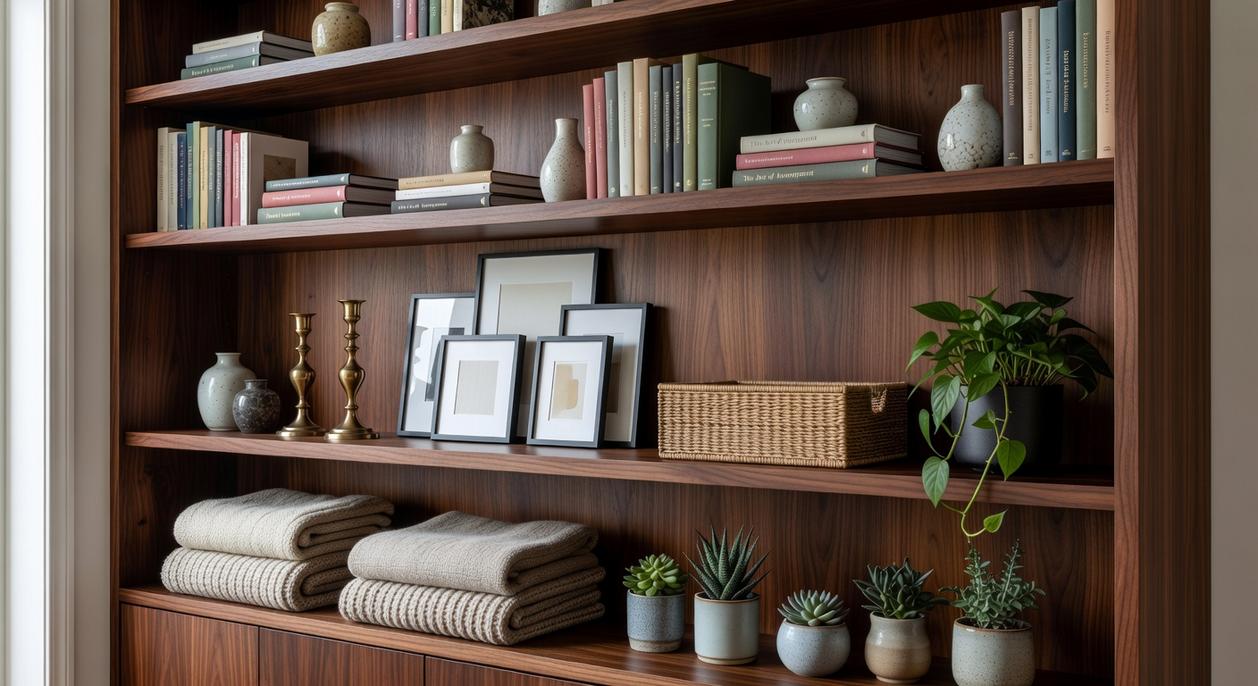
Great styling isn’t random—it’s rooted in visual psychology and backed by design research. Studies in cognitive science show that people recall images grouped in odd numbers more easily than even-numbered arrangements (Palmer & Rock, 1994). That’s the foundation of The Rule of Threes: grouping decor in threes (or other odd numbers) creates movement and tension that feels natural. Picture three ceramic vases at slightly different heights. Two feels predictable. Four feels crowded. Three? Balanced, but interesting.
Varying Height and Scale
Flat arrangements bore the eye. Interior design case studies consistently show rooms with mixed vertical scale are rated as more dynamic and inviting. Combine tall elements (lamps, vases), medium anchors (stacked books), and smaller accents (bowls or sculptural objects). This contrast creates rhythm. Think skyline, not parking lot.
Pro tip: If everything sits at the same height, add a stack of books underneath one object for instant elevation.
Creating Depth with Layering
Layering mimics how we perceive space in real life—foreground, middle ground, background. Place larger items like framed art or trays at the back, then overlap smaller pieces in front. Retail visual merchandising studies show layered displays increase perceived richness and value. (Yes, your shelf can borrow tricks from luxury boutiques.)
The ‘Zig-Zag’ Technique
Guide the eye intentionally. Repeat a color or texture diagonally from top shelf to bottom—left to right, then right to left. This zig-zag pattern keeps attention moving, a technique often used in gallery layouts.
If you’re learning how to style shelves, these principles work together to prevent clutter while maintaining flow. For foundational fabric balance, review rugs curtains and cushions soft furnishing basics explained.
Practical Styling Techniques for a Polished Look
Great shelves don’t happen by accident. They’re styled with intention (and a little restraint). Here’s how to elevate yours without overthinking it.
1. Style Books Creatively
Forget rigid vertical rows. Instead:
- Stack 2–4 books horizontally to create a platform.
- Place a small vase, candle, or sculptural object on top.
- Alternate with upright books to create rhythm.
This layering adds dimension and prevents the “library shelf” effect. If you’re wondering how to style shelves, start here—it’s the fastest visual upgrade with zero new purchases.
Pro tip: Remove overly busy dust jackets for a cleaner, more cohesive palette.
2. Incorporate Natural Elements
Plants instantly soften hard lines. A trailing pothos, dried eucalyptus, or even a bowl of natural stones introduces warmth and movement. Research shows natural materials in interiors can reduce stress and improve mood (American Society of Interior Designers).
No green thumb? High-quality faux stems still add organic shape (no judgment).
3. Mix Textures and Materials
Combine:
- Glass with wood
- Ceramic with metal
- Matte finishes with reflective surfaces
Contrast creates sophistication. Think of it like fashion—an all-denim outfit rarely excites, but mixed fabrics do. The same logic applies to decor.
4. Use Negative Space Intentionally
Negative space means the empty areas around objects. It’s not “unused”—it’s strategic breathing room.
Leave gaps between groupings. Step back. If your eye doesn’t know where to land, remove one item. (Yes, editing is the hardest part.)
A polished shelf isn’t fuller—it’s smarter.
Adapting Your Approach for Different Shelf Types
Different shelves demand different strategies—so treat them accordingly.
For tall bookcases, create visual stability from the ground up. Place heavier books, storage boxes, or substantial decor pieces on lower shelves to anchor the unit. Gradually transition to lighter, smaller accents as you move upward. This keeps the entire structure feeling BALANCED instead of top-heavy (like a Jenga tower mid-collapse).
For floating shelves, edit ruthlessly. These thrive on a LESS IS MORE philosophy. Choose two or three high-impact objects—perhaps a sculptural vase and a framed print—and let negative space do the rest. Overcrowding defeats their sleek appeal.
For built-in shelving, integrate decor with the architecture. Paint the back panels a contrasting color for depth and drama, then echo that shade subtly throughout the room. If you’re wondering how to style shelves effectively, start with cohesion:
- Repeat materials
- Vary heights
- Maintain consistent spacing
Pro tip: Step back often—distance reveals imbalance faster than close inspection.
Beautiful shelves, in my opinion, come down to intention. Instead of choosing between clutter and cold minimalism, blend heart and strategy. Here’s how to style shelves that feel alive:
- Start with meaningful pieces.
- Layer with varied heights.
- Edit ruthlessly.
So, pick one shelf today and transform it.
Bring Your Shelves to Life with Confidence
You came here to finally understand how to style shelves without second-guessing every piece or ending up with cluttered, awkward displays. Now you know it’s not about filling space — it’s about balance, layering, proportion, and intention.
If you’ve ever felt frustrated staring at empty shelves or overwhelmed by too many decor pieces, that struggle is valid. Unstyled shelves can make an entire room feel unfinished. But when done right, they become a focal point that elevates your whole space.
The key is simple: mix heights, vary textures, stack books strategically, add greenery, and leave breathing room. Repeat shapes thoughtfully. Create visual triangles. Edit ruthlessly. When you apply these principles, your shelves won’t just hold items — they’ll tell a story.
Now it’s your turn. Take one shelf today and restyle it using what you’ve learned about how to style shelves. Start small. Adjust. Step back. Refine.
If you want more expert-backed decor strategies, space-saving techniques, and modern styling insights trusted by design enthusiasts everywhere, explore our in-depth guides and start transforming your home one detail at a time. Your space deserves more than random placement — and you’re now fully equipped to make it happen.
 Director of Community & Partnerships
Ask Eloria Esthova how they got into decor trends and shifts and you'll probably get a longer answer than you expected. The short version: Eloria started doing it, got genuinely hooked, and at some point realized they had accumulated enough hard-won knowledge that it would be a waste not to share it. So they started writing.
What makes Eloria worth reading is that they skips the obvious stuff. Nobody needs another surface-level take on Decor Trends and Shifts, Space Optimization Hacks, In-Depth Guides. What readers actually want is the nuance — the part that only becomes clear after you've made a few mistakes and figured out why. That's the territory Eloria operates in. The writing is direct, occasionally blunt, and always built around what's actually true rather than what sounds good in an article. They has little patience for filler, which means they's pieces tend to be denser with real information than the average post on the same subject.
Eloria doesn't write to impress anyone. They writes because they has things to say that they genuinely thinks people should hear. That motivation — basic as it sounds — produces something noticeably different from content written for clicks or word count. Readers pick up on it. The comments on Eloria's work tend to reflect that.
Director of Community & Partnerships
Ask Eloria Esthova how they got into decor trends and shifts and you'll probably get a longer answer than you expected. The short version: Eloria started doing it, got genuinely hooked, and at some point realized they had accumulated enough hard-won knowledge that it would be a waste not to share it. So they started writing.
What makes Eloria worth reading is that they skips the obvious stuff. Nobody needs another surface-level take on Decor Trends and Shifts, Space Optimization Hacks, In-Depth Guides. What readers actually want is the nuance — the part that only becomes clear after you've made a few mistakes and figured out why. That's the territory Eloria operates in. The writing is direct, occasionally blunt, and always built around what's actually true rather than what sounds good in an article. They has little patience for filler, which means they's pieces tend to be denser with real information than the average post on the same subject.
Eloria doesn't write to impress anyone. They writes because they has things to say that they genuinely thinks people should hear. That motivation — basic as it sounds — produces something noticeably different from content written for clicks or word count. Readers pick up on it. The comments on Eloria's work tend to reflect that.