If you’re looking to refresh your living space but aren’t sure where to start, you’re in the right place. This guide is designed to help you understand the core principles of stylish, functional interiors—so you can make confident decisions that truly elevate your home. From layout planning and color coordination to lighting, textures, and soft furnishing basics, we break down the essential elements that bring a room together beautifully and practically.
Many homeowners struggle with turning inspiration into execution. This article focuses on clear, actionable insights that simplify modern interior techniques and smart space optimization, helping you avoid costly mistakes and design missteps.
Our recommendations are grounded in current decor trends, practical styling experience, and extensively researched interior design principles. By the end, you’ll have a solid foundation to transform any room into a cohesive, inviting space that reflects your personal style while maximizing comfort and functionality.
From Fabric to Feeling
Textiles are the unsung heroes of interior design, turning bare rooms into lived-in sanctuaries. Yet many homeowners freeze at endless swatches and patterns, defaulting to beige (safe, but sleepy). Start with soft furnishing basics: balance texture, scale, and color before chasing trends. Think in layers—curtains, cushions, throws—each adding depth and story.
Some argue bold fabrics overwhelm small spaces. Fair point. But strategic contrast often makes rooms feel intentional, not chaotic.
- Pro tip: test fabric samples in morning and evening light.
Prediction (speculation): Earthy weaves and tactile materials will dominate as we crave comfort-driven spaces ahead.
The Four Pillars: Understanding What Textiles Actually Do
I’ll admit it: I once designed a living room that looked incredible in photos—and felt completely lifeless in person. The mistake? I treated textiles as afterthoughts instead of foundational tools. Once I understood the four pillars, everything changed.
Pillar 1 – Color & Pattern
First, textiles carry your color palette. Throw pillows, rugs, and curtains can act as a neutral base or a bold statement. I once overcommitted to trendy mustard drapes (very “retro reboot” energy) and realized too late they hijacked the entire room. Lesson learned: introduce color gradually, and test swatches in real light.
Pillar 2 – Texture & Depth
Next, texture prevents sterility. Linen, velvet, wool, and silk each reflect light differently and add tactile interest. A space with only smooth cotton feels flat. Mixing materials creates contrast—and contrast creates warmth.
Pillar 3 – Space Definition
Then there’s spatial structure. Area rugs anchor furniture and define zones, especially in open layouts. I once bought a rug that was too small (a classic rookie error). The room felt disconnected. Bigger rugs unify.
Pillar 4 – Light & Sound Control
Finally, function matters. Curtains filter sunlight and protect privacy, while rugs absorb sound (studies show soft surfaces reduce echo significantly; see The Journal of the Acoustical Society of America). Mastering these soft furnishing basics transforms both look and feel.
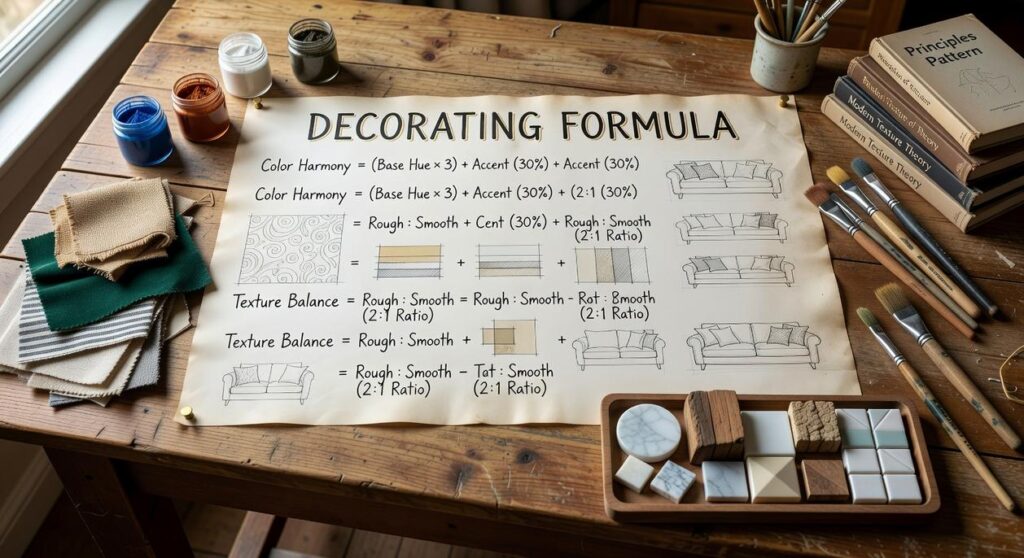
The Decorator’s Formula: How to Mix and Match Like a Professional

If you’ve ever stared at fabric swatches and thought, How do designers make this look so effortless?—you’re not alone. Mixing patterns and textures can feel like solving a puzzle. The good news? There’s a formula.
The Rule of Three for Patterns
First, start with a large-scale pattern—this is your “hero” fabric (the bold floral, oversized abstract, or dramatic print). Use it on a statement piece like curtains or a feature chair.
Next, layer in a medium-scale pattern, such as a stripe or plaid. This balances the boldness of your hero piece without competing with it.
Finally, add a small-scale pattern—think subtle geometrics or tiny dots. These act as visual “connectors” that tie everything together.
For example, pair a large botanical print cushion, a striped throw, and a small polka-dot accent pillow. Suddenly, your sofa looks curated—not chaotic. (It’s less “fabric store explosion,” more “designer showroom.”)
The Scale & Proportion Principle
Now consider proportion. A delicate, tiny print can disappear on a large sectional. Conversely, an oversized pattern can overwhelm a petite armchair.
As a rule of thumb, match bold patterns with larger furniture and subtler prints with smaller pieces. Step back and view the room from across the space—if one item screams louder than the rest, adjust accordingly.
The Texture Layering Technique
Patterns catch the eye. Texture makes you want to stay.
Combine opposites for depth: smooth leather with chunky knit, silk with raw linen, velvet with woven cotton. This contrast creates warmth and dimension.
When applying soft furnishing basics, focus on touch as much as appearance. Run your hand across surfaces—does the room feel varied or flat?
For more step-by-step guidance, explore the ultimate checklist for styling a cozy living room.
Pro tip: Limit your color palette to three to five core shades to keep mixed patterns cohesive. Structure plus restraint—that’s the real designer secret.
Putting Theory into Practice: A Room-by-Room Textile Strategy
The Living Room – The Social Hub
In most homes, the living room does the heavy lifting. It hosts guests, movie marathons, and the occasional work-from-couch Monday. That means durability isn’t optional—it’s essential. Anchor the space with a correctly sized rug (ideally large enough for at least the front legs of your seating to sit on it). In open-concept layouts common in urban condos, this helps visually “zone” the room.
Layer pillows in varied textures—linen, boucle, velvet—and mix sizes for depth. Designers often follow the 22-20-18 inch rule for balanced layering. Choose window treatments that balance light control with aesthetics; in sunny climates, solar shades paired with linen drapes prevent glare without sacrificing style. Yes, performance fabrics may cost more, but families with pets know they’re worth it.
The Bedroom – The Personal Sanctuary
Here, softness rules. Start with breathable cotton or percale sheets, add a quilt for structure, and finish with a duvet for warmth. This layered approach adapts well to seasonal shifts (especially in regions with humid summers and chilly winters).
Blackout curtains improve sleep quality by blocking ambient light—studies from the Sleep Foundation support darker environments for deeper rest. A plush rug underfoot adds insulation and comfort during cold mornings. These soft furnishing basics create a retreat-like atmosphere without requiring a full renovation.
The Dining Room – Softening Hard Surfaces
Dining rooms are often dominated by wood, glass, and metal. Upholstered chairs absorb sound (helpful in loft-style spaces with high ceilings). Add a textured table runner and tailored drapery to elevate the mood from functional to inviting—because even takeout deserves a beautiful setting.
Weaving Your Signature Style into Every Room
You now understand the framework. The overwhelm of endless fabric swatches and color cards fades once you apply structure to your choices. By using pattern scale (the size of prints in relation to the room), texture balance (mixing smooth, rough, matte, and plush finishes), and strategic placement (where textiles draw the eye), you turn chaos into cohesion.
Some argue that rules stifle creativity. But in reality, guidelines like the “Rule of Three”—combining three complementary pillows with varied scale and texture—create visual harmony while still leaving room for flair (think of it as jazz, not a strict symphony).
Start small. Refresh your sofa with layered throws in contrasting weaves, or anchor a bedroom with curtains that frame natural light intentionally. Even revisiting your soft furnishing basics can dramatically shift mood and function.
- Pro tip: When in doubt, vary texture before adding more color—it’s subtle, sophisticated, and instantly elevating.
Bring Your Space Together with Confidence
You started this guide looking for clarity on how to style your home with intention and confidence. Now you understand how layering textures, choosing the right fabrics, balancing colors, and mastering soft furnishing basics can completely transform the feel of a room.
The frustration of a space that feels unfinished or disconnected often comes down to overlooked details—cushions that don’t coordinate, curtains that fall flat, or rugs that don’t anchor the layout. When these elements work together, your home stops feeling random and starts feeling refined.
The key is simple: apply what you’ve learned. Assess one room at a time. Upgrade your textiles strategically. Focus on cohesion, comfort, and proportion.
If you’re ready to eliminate guesswork and create a home that feels polished and inviting, start implementing these styling principles today. Explore more expert-backed decor insights and practical home styling guides to make every room feel professionally designed—without the professional price tag. Your perfectly styled space is just a few smart updates away.
 FOUNDER & CEO
There is a specific skill involved in explaining something clearly — one that is completely separate from actually knowing the subject. Veronicay Simpsonita has both. They has spent years working with decor trends and shifts in a hands-on capacity, and an equal amount of time figuring out how to translate that experience into writing that people with different backgrounds can actually absorb and use.
Veronicay tends to approach complex subjects — Decor Trends and Shifts, Pal Modern Interior Techniques, Highlight Hub being good examples — by starting with what the reader already knows, then building outward from there rather than dropping them in the deep end. It sounds like a small thing. In practice it makes a significant difference in whether someone finishes the article or abandons it halfway through. They is also good at knowing when to stop — a surprisingly underrated skill. Some writers bury useful information under so many caveats and qualifications that the point disappears. Veronicay knows where the point is and gets there without too many detours.
The practical effect of all this is that people who read Veronicay's work tend to come away actually capable of doing something with it. Not just vaguely informed — actually capable. For a writer working in decor trends and shifts, that is probably the best possible outcome, and it's the standard Veronicay holds they's own work to.
FOUNDER & CEO
There is a specific skill involved in explaining something clearly — one that is completely separate from actually knowing the subject. Veronicay Simpsonita has both. They has spent years working with decor trends and shifts in a hands-on capacity, and an equal amount of time figuring out how to translate that experience into writing that people with different backgrounds can actually absorb and use.
Veronicay tends to approach complex subjects — Decor Trends and Shifts, Pal Modern Interior Techniques, Highlight Hub being good examples — by starting with what the reader already knows, then building outward from there rather than dropping them in the deep end. It sounds like a small thing. In practice it makes a significant difference in whether someone finishes the article or abandons it halfway through. They is also good at knowing when to stop — a surprisingly underrated skill. Some writers bury useful information under so many caveats and qualifications that the point disappears. Veronicay knows where the point is and gets there without too many detours.
The practical effect of all this is that people who read Veronicay's work tend to come away actually capable of doing something with it. Not just vaguely informed — actually capable. For a writer working in decor trends and shifts, that is probably the best possible outcome, and it's the standard Veronicay holds they's own work to.